
By EIV Diagnostics · August 25, 2026
How Accurate Is PCR Testing? What the Evidence Actually Shows
Discover the real-world accuracy of PCR tests for COVID-19. Learn how timing, sample quality, and lab transport affect reliability.
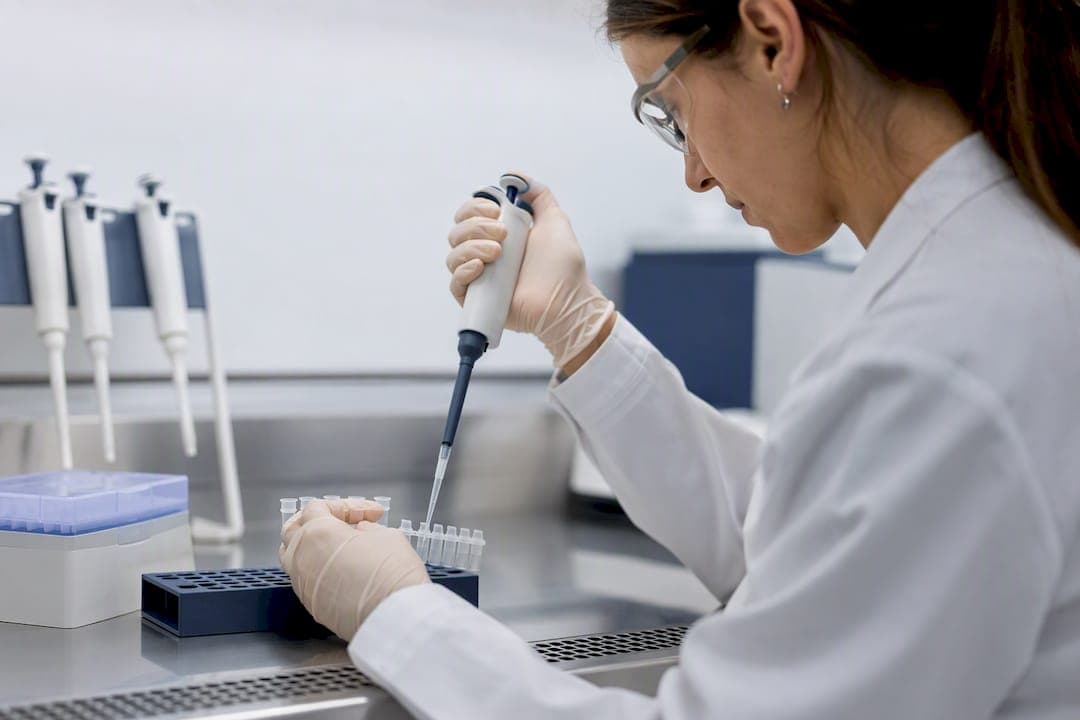
PCR testing is the laboratory gold standard for detecting infections like COVID-19: analytically, it can detect viral genetic material with near-perfect specificity and sensitivity under controlled lab conditions. But real-world accuracy is a different story, one that depends heavily on when you’re tested, how the sample was collected, and how it traveled to the lab.
Real time PCR routinely achieves analytical specificity and sensitivity approaching 100% at a validated limit of detection, because the technology amplifies genetic material millions of times over in a matter of hours. Clinical sensitivity, the rate at which PCR correctly identifies infection in actual patients, tells a less tidy story. Peer-reviewed estimates from the College of American Pathologists put clinical sensitivity commonly in the 70% to 90% range, driven down by sample quality, timing relative to exposure, and specimen type.
Quick take: PCR’s lab performance is about as close to perfect as diagnostic testing gets. Its real-world performance is very good but not flawless, and the gap between the two numbers is almost entirely explained by human and logistical factors, not the chemistry itself.
- A negative result taken too early after exposure, or from a poorly collected swab, can miss an active infection.
- A borderline or unexpected positive should prompt confirmatory testing and a conversation with your clinician, not panic.
- If your symptoms don’t match your result, retesting 48 to 72 hours later is often the right call.
EIV Diagnostics, an independent pathology laboratory built around molecular pathology and board-certified pathologist oversight, breaks down exactly what drives that gap and what to do about it below.
Key Takeaways
PCR testing achieves near-perfect analytical performance in the lab, but real-world accuracy depends on collection timing, specimen quality, and how a lab handles borderline results.
| Point | Details |
|---|---|
| Analytical vs. clinical accuracy | Analytical sensitivity often nears 100% at validated LoD, while clinical sensitivity commonly runs 70% to 90% depending on timing and sample quality. |
| Pre-analytical errors dominate | Collection, storage, and transport issues account for roughly 60% to 70% of lab errors, more than assay design itself. |
| Timing drives false negatives | Testing too early after exposure is one of the strongest predictors of a missed infection; retesting 48 to 72 hours later closes much of that gap. |
| False positives are rare with controls | Negative and positive run controls, plus multi-target assay design, catch contamination before results reach patients. |
| EIV Diagnostics applies lab-grade controls | Board-certified pathologist oversight, validated multi-target assays, and mobile phlebotomy collection reduce the pre-analytical errors that most often cause unreliable results. |
Table of Contents
- PCR Test Accuracy: Analytical vs. Clinical Performance Explained
- Why False Negatives Happen: Sample Timing, Collection, and Transport
- What Causes False Positives, and How Labs Prevent Them
- Ct Values and Limit of Detection: The Numbers Behind the Result
- What To Do With a Positive, Negative, or Borderline PCR Result
- How EIV Diagnostics Builds Accuracy Into Every PCR Result
- Why Assay Design Still Matters After the Sample Arrives
- The Gap Between “Accurate” and “Reliable” Is Where Most Confusion Lives
- Get Lab-Grade PCR Testing With Proper Collection Built In
- Sources
- FAQ
PCR Test Accuracy: Analytical vs. Clinical Performance Explained
When people ask how accurate PCR really is, they’re usually conflating two different measurements that lab scientists keep carefully separate: analytical performance and clinical performance. Understanding the difference is the single most useful thing you can take from this article, because it explains why a test can be technically flawless and still miss an infection.
Analytical sensitivity and specificity describe how well the assay performs against a known sample in a controlled lab environment. Analytical sensitivity refers to the smallest amount of viral genetic material the test can reliably detect, expressed as a limit of detection, or LoD. Analytical specificity refers to the test’s ability to avoid false signals from other genetic material, similar viruses, or contaminants. These are the numbers labs generate during validation, running known positive and negative samples over and over to confirm the assay behaves consistently.
Clinical sensitivity and specificity measure something entirely different: how the test performs against real patients, whose samples vary in quality, whose viral loads change over the course of infection, and whose specimens were collected by a human being under real-world conditions. Clinical performance is typically calculated by comparing PCR results against a reference standard, often a composite of repeated testing or clinical diagnosis.
The gap between these two numbers is the story. According to the College of American Pathologists, analytical sensitivity for SARS-CoV-2 PCR assays often approaches 100% once viral RNA concentration reaches roughly 500 to 5,000 copies per milliliter, the validated LoD for most platforms. Clinical sensitivity, though, commonly lands in the 70% to 90% range depending on the study population, sample type, and timing. That’s not a flaw in the chemistry. It’s a reflection of everything that happens before the sample reaches the amplification machine.
There’s a third piece that matters just as much and gets discussed far less: predictive value. Sensitivity and specificity are fixed properties of the test, but positive predictive value and negative predictive value shift depending on how common the infection is in the population being tested. During a surge, when prevalence is high, a positive result is highly likely to be a true positive. During a lull, when prevalence is low, the same test produces proportionally more false positives relative to true positives, even though the assay itself hasn’t changed at all.
- Analytical sensitivity: how little virus the test can detect in ideal lab conditions.
- Analytical specificity: how well the test avoids cross-reacting with other organisms.
- Clinical sensitivity: how often the test catches a true infection in real patients.
- Clinical specificity: how often the test correctly rules out infection in real patients.
- Predictive value: how much a result should be trusted, adjusted for how common the disease is right now.
If you remember one thing from this section, remember that “PCR is 99% accurate” is almost always a claim about analytical performance, not the number that determines whether your individual test result should be trusted at face value.
Why False Negatives Happen: Sample Timing, Collection, and Transport
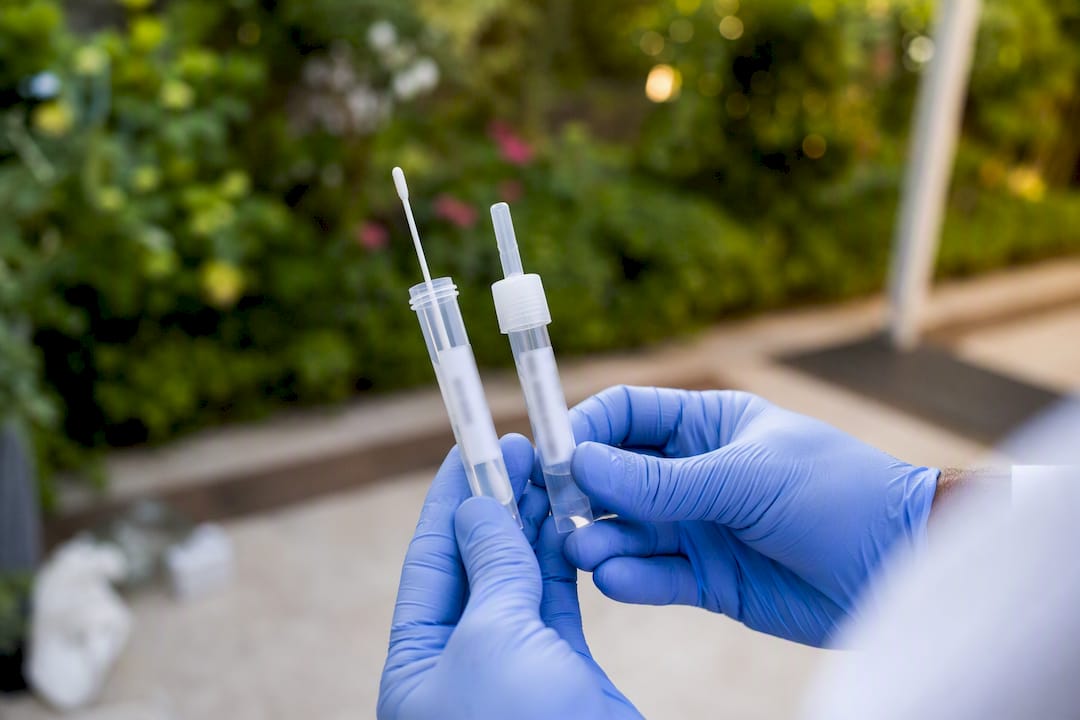
Most PCR errors don’t happen in the lab. They happen before the sample ever gets there. Pre-analytical errors, meaning problems with collection, storage, or transport, account for roughly 60% to 70% of all laboratory errors across molecular diagnostics generally, not just infectious disease testing. That statistic alone should reframe how you think about a negative result: the swab technique and the shipping box matter almost as much as the assay itself.
Here’s why timing and site matter so much biologically. Viruses replicate at different rates in different tissues, and the concentration of viral genetic material at any given collection site rises and falls over the course of an infection. Test too early, before viral load has climbed high enough to clear the assay’s limit of detection, and you get a false negative even though the person is genuinely infected and will test positive a day or two later.
- Testing too early after exposure. Viral load often hasn’t reached detectable levels yet, especially in the first one to two days after exposure, before the LoD threshold is crossed.
- Wrong specimen site or shallow collection. A nasal swab that doesn’t reach the site of active viral replication, or a sample collected too gently, yields less genetic material than the infection actually produces.
- Saliva or lower respiratory samples used inconsistently. Different specimen types have different sensitivity profiles depending on the infection’s stage. Nasopharyngeal swabs tend to outperform anterior nasal swabs early in infection, while saliva can perform comparably in some studies but not others.
- Storage temperature swings. RNA degrades if a sample sits too warm for too long between collection and testing.
- Transport delays. The longer a specimen travels before extraction, the more opportunity for degradation, particularly without proper cold-chain handling.
Timing relative to symptom onset is one of the strongest known predictors of PCR sensitivity, and it’s also the factor patients have the most control over. Testing on the day of exposure, before symptoms even start, is close to the least reliable window there is.
Pro Tip: If you test negative but have a strong exposure history or matching symptoms, don’t treat that single result as final. Retest 48 to 72 hours later or after symptoms actually appear. A second sample, timed better, catches a meaningful share of infections the first one missed.
For patients managing symptom onset carefully, understanding how PCR compares to rapid antigen testing helps clarify which test fits which stage of illness. Antigen tests generally need a higher viral load to trigger a positive, which is one more reason timing changes which test makes sense.
What Causes False Positives, and How Labs Prevent Them
False positives get less attention than false negatives, but they’re the result people fear more, largely because they carry immediate consequences: isolation, missed work, canceled plans. The good news is that false positives are considerably rarer than false negatives when a lab runs proper quality controls, and the mechanisms behind them are well understood and largely preventable.
Amplicon carryover is the most cited cause. Because PCR works by amplifying genetic material millions of times over, even a trace amount of previously amplified product drifting into a new sample, through shared equipment, aerosols, or careless handling, can trigger a false signal. Labs prevent this through physical separation of pre-amplification and post-amplification workspaces, unidirectional workflow, and enzymatic decontamination protocols.
Reagent or cross-sample contamination is the second major pathway. A pipette tip reused improperly, a reagent lot contaminated at the source, or samples processed too close together on a bench can introduce genetic material from one sample into another. Assay cross-reactivity is a third, subtler cause: if a primer or probe isn’t specific enough, it can occasionally bind to genetic sequences from related organisms rather than the target pathogen. Rigorous assay design and validation against a panel of related and unrelated organisms is how labs rule this out before a test ever reaches patients.
Labs mitigate all three risks with a standard toolkit:
- Negative controls run alongside every batch, so any unexpected amplification signals a contamination problem before results go out.
- Positive controls confirm the assay is working correctly and hasn’t degraded.
- Contamination monitoring and documented cleaning protocols between runs.
- Multi-target assay design, so a result depends on more than one genetic marker agreeing.
If you get a positive result that doesn’t match your symptoms, your exposure history, or a recent negative test, confirmatory testing is a reasonable next step, and your clinician can weigh the result against your clinical picture rather than treating it in isolation. This same logic applies broadly across molecular and genetic testing, not just infectious disease. Unexpected positive results in genetic testing generally warrant the same kind of confirmatory follow-up, for similar underlying reasons.
Ct Values and Limit of Detection: The Numbers Behind the Result
Two technical terms drive most of the confusion around PCR results: cycle threshold, or Ct, and limit of detection, or LoD. Understanding them in plain language clears up a lot of the mystery behind why one lab’s positive doesn’t always mean the same thing as another lab’s positive.
Ct value is the number of amplification cycles it takes for the test to detect a signal above background. Lower Ct values mean more genetic material was present at the start, which generally correlates with higher viral load. Higher Ct values mean the assay had to amplify many more times before detecting anything, which usually means a very small amount of viral material, sometimes near the edge of what the test can reliably call positive at all.
LoD, the limit of detection, is the lowest concentration of viral genetic material an assay can consistently detect, established through replicate testing during validation. Labs run known dilutions of viral material repeatedly to statistically confirm the concentration at which the assay reliably calls a positive, typically requiring the assay to detect the target in a high percentage of replicates at that concentration.
Here’s the statistic that matters for interpreting your own result: a Ct value near an assay’s cutoff represents genetic material right at the edge of reliable detection, meaning a repeat test on the same patient could plausibly land on either side of positive and negative. That’s not the lab making an error. That’s the biology of low viral loads intersecting with the physics of amplification chemistry.
- Ct values are not standardized across platforms, so a Ct of 35 on one assay doesn’t mean the same viral load as a Ct of 35 on another.
- Most labs don’t report raw Ct values to patients because the number is meaningless without knowing the specific assay’s calibration.
- A result flagged as low-positive or near the cutoff often warrants a repeat sample rather than a single definitive call.
- LoD validation, not a single test run, is what underpins any lab’s claim that its assay is analytically reliable.
This is also why comparing PCR results across two different testing sites or platforms, especially over time, can be misleading without knowing the assay-specific validation behind each one. The NIST measurement science initiative has pushed for better inter-laboratory standardization precisely because this variability affects comparability across the industry, not just for COVID-19 testing.
What To Do With a Positive, Negative, or Borderline PCR Result
The result itself is only half the equation. What you do next determines whether that result actually protects your health or just sits there as a data point.
- Positive result. Begin appropriate isolation precautions and clinical evaluation right away. If the result doesn’t match your symptoms, exposure history, or a recent negative test, ask your clinician about confirmatory testing before assuming the result is definitively wrong.
- Negative result with ongoing symptoms or known exposure. A single negative does not rule out infection, particularly if you tested early. Retest 48 to 72 hours later, or once symptoms actually develop, since viral load typically climbs into detectable range within that window.
- Indeterminate or low-positive result. This usually means viral genetic material was present but near the assay’s limit of detection. Follow-up sampling, ideally with a fresh, well-collected specimen, combined with clinical correlation from a provider, is the standard next step.
- Result inconsistent with clinical presentation. Trust the combination of test and clinical judgment over the test alone. PCR is powerful, but it’s one input, not a verdict independent of everything else you and your provider know.
The Cleveland Clinic’s patient guidance on PCR testing reinforces this same sequence: test, interpret in context, retest when the picture doesn’t add up.
Pro Tip: Poor sample collection is one of the most common, and most fixable, causes of an unreliable result. If self-collection or clinic logistics have been a barrier, a supervised draw or swab through a mobile phlebotomy service can improve specimen quality meaningfully compared to a rushed at-home collection.
How EIV Diagnostics Builds Accuracy Into Every PCR Result
EIV Diagnostics runs its molecular testing under board-certified pathologist oversight, with quality controls built specifically to close the gap between analytical promise and clinical reality. That means validated multi-target assays, documented LoD verification through replicate testing, and run controls, negative and positive, on every batch that goes through the lab.
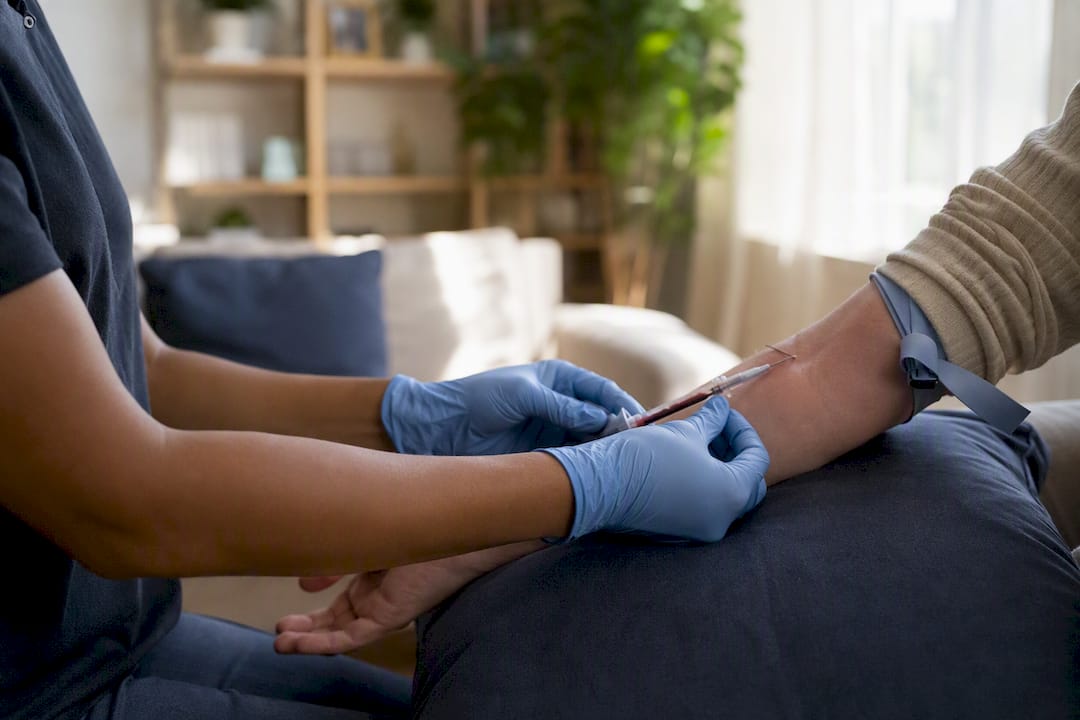
Sample acceptability criteria matter just as much as the assay itself. EIV Diagnostics screens specimens against defined collection and handling standards before they ever reach amplification, which is precisely where most pre-analytical error creeps in. Staff training on collection technique feeds directly into result reliability, and mobile phlebotomy service extends that same standard of collection to a patient’s home or office instead of leaving it to inconsistent self-collection.
- Board-certified pathologists oversee result interpretation, not just automated reporting.
- Multi-target assay design reduces reliance on a single genetic marker.
- Documented LoD verification and run controls on every batch.
- Mobile phlebotomy for properly supervised sample collection outside a traditional clinic.
| Practice | Why It Matters |
|---|---|
| Multi-target assay validation | Reduces the chance a single primer mismatch drives a false result. |
| LoD verification via replicates | Confirms the assay reliably detects material at its stated threshold. |
| Run-level negative and positive controls | Catches contamination or reagent failure before results are released. |
| Mobile phlebotomy collection | Improves specimen quality by replacing inconsistent self-collection. |
Explore molecular pathology services at EIV Diagnostics for a closer look at how these controls apply across test types.
Why Assay Design Still Matters After the Sample Arrives
Even a perfectly collected sample can produce an unreliable result if the assay behind it wasn’t designed and validated carefully. Primer and probe design determines whether the test binds tightly to its intended genetic target or occasionally reacts to something else entirely, which is why validation against panels of related organisms happens before an assay ever reaches production use.
Post-analytical error, the mistakes that happen after amplification but before a result reaches a patient or provider, deserves its own attention too. Misinterpretation of a borderline Ct value, transcription errors in reporting, or a mismatch between the assay’s validated intended use and how it’s being applied clinically all fall into this category. These are precisely the failure points that rigorous rRT-PCR validation protocols are built to catch, through defined reporting thresholds, documented interpretation criteria, and pathologist review rather than fully automated sign-off.
The practical upshot: a test’s published sensitivity and specificity numbers only hold if the assay was validated properly in the first place and the lab consistently interprets borderline results the same way every time. That consistency, more than any single technical spec, is what separates a dependable result from a coin flip dressed up in scientific language.
The Gap Between “Accurate” and “Reliable” Is Where Most Confusion Lives
The conventional advice on PCR accuracy stops at “it’s the gold standard,” and that’s true but incomplete enough to be misleading. The more useful framing, and the one this evidence actually supports, is that PCR’s chemistry has essentially solved the analytical problem while the clinical problem, timing, collection technique, and interpretation of borderline results, remains a human and logistical challenge.
What gets underestimated is how much of that clinical gap is fixable at the point of collection, not the point of amplification. A poorly collected swab or a sample tested a day too early undermines an assay that would otherwise perform close to its analytical ceiling. That’s a solvable problem, and it’s exactly where supervised collection and disciplined lab protocols earn their value. The instinct to distrust a negative result outright, or to panic over a borderline positive, misses the more useful question: was this sample collected well, and was it tested at the right time? Get those two variables right, and PCR performs about as close to its analytical promise as any diagnostic tool available today.
— EIV Diagnostics
Get Lab-Grade PCR Testing With Proper Collection Built In
Most of the accuracy gap discussed throughout this article traces back to one controllable variable: how the sample was collected and handled before it ever reached amplification. EIV Diagnostics addresses that directly by pairing board-certified pathologist oversight with mobile phlebotomy, so your sample is drawn correctly the first time instead of relying on inconsistent self-collection at home.
Whether you’re a patient testing with or without a doctor’s order, or a provider looking for a lab partner with validated multi-target assays and transparent quality controls, EIV Diagnostics’ clinical pathology services are built around the same principle covered throughout this piece: analytical strength only matters if the sample reaches the lab intact and well-timed. If home or office collection would improve your testing experience, schedule a mobile phlebotomy visit and get a properly collected sample handled by a lab that treats pre-analytical quality as seriously as the science behind the assay.
This article is general information, not a substitute for advice from a qualified doctor. Consult a qualified healthcare professional about your own circumstances before acting on anything here.
Sources
- Molecular diagnostics — NCBI Bookshelf
- How good are COVID-19 (SARS-CoV-2) diagnostic PCR tests? — College of American Pathologists
FAQ
Can a PCR test be wrong?
Yes. False negatives happen most often from testing too early after exposure or poor sample collection, while false positives are rare and usually tied to contamination, both of which labs control for with validated assays and run controls.
What is the accuracy of PCR testing?
Analytical sensitivity and specificity often approach 100% at a validated limit of detection, but real-world clinical sensitivity commonly falls in the 70% to 90% range depending on timing, specimen type, and sample quality.
What diseases can PCR detect?
PCR detects a wide range of infectious diseases by identifying pathogen-specific genetic material, including respiratory viruses like SARS-CoV-2 and influenza, as well as bacterial infections such as H. pylori, which EIV Diagnostics tests for directly.
What does a PCR test detect?
A PCR test detects the presence of a pathogen’s genetic material, DNA or RNA, by amplifying even small amounts present in a collected specimen until it reaches a detectable threshold.
How is PCR different from a rapid antigen test?
PCR detects genetic material through amplification and generally requires less viral material to return a positive result, while rapid antigen tests detect viral proteins directly and typically need a higher viral load, trading some sensitivity for faster turnaround.