
By EIV Diagnostics · October 12, 2026
Pathology Second Opinion: 25% of Cases Differed, Get Slides Reviewed
A 2011 study found discrepancies in 25% of pathology cases. Learn when review helps, how to request slides, and how to submit them to EIV Diagnostics.
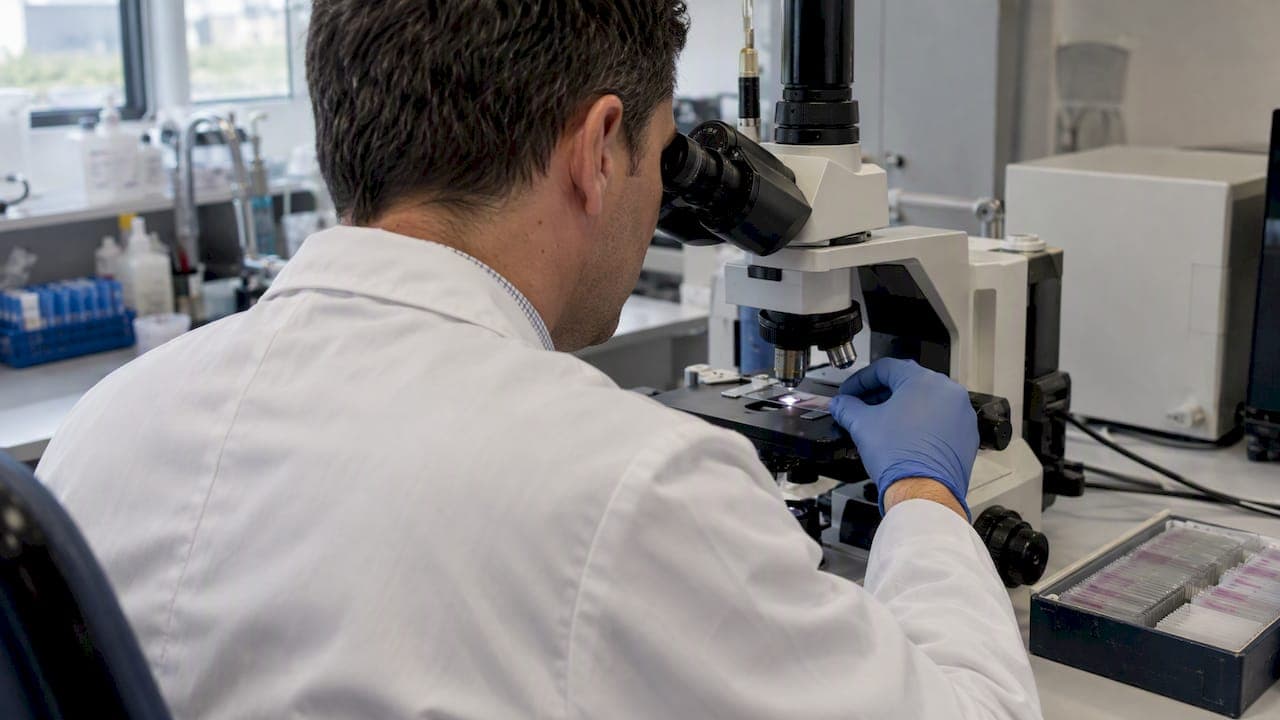
A formal pathology second opinion can confirm, refine, or occasionally change a diagnosis in ways that affect treatment. Research on second-opinion reviews shows measurable rates of diagnostic disagreement, which is why many patients and clinicians request one before major treatment decisions. We walk through when a review is worth pursuing, how to request slides, and what to expect from the process.
TL;DR:
- A 2011 study found discrepancies in 25% of 2,718 cases, including 6.2% major; a 2021 review found 1% major across a different case mix.
- Thyroid fine needle aspiration had the highest discordance, at 15.3%; bone and soft tissue reached 9.6%, endocrine 8.8%, and genitourinary specimens 6.7%.
- A formal reviewer needs original glass slides and the written report; tissue blocks may be necessary for immunohistochemistry or molecular testing.
- Call the receiving lab first to confirm materials; HIPAA gives patients reports within 30 days, but slide release is separate, and coverage and costs vary.
- When reports conflict, discuss the discrepancy with the treating clinician and ask whether tumor board review or additional testing could resolve it.
Table of Contents
- How often second opinions change diagnoses and why they add value
- What a formal pathology second-opinion review includes
- Which cases most benefit from subspecialty review
- How to request slides and get a second opinion
- What to expect from the second-opinion report
- How EIV Diagnostics handles formal second-opinion reviews
- Why we recommend subspecialty review when treatment hinges on pathology
- Request a second opinion from EIV Diagnostics
- FAQ
- Sources
How often second opinions change diagnoses and why they add value
Diagnostic review is not a formality. A 2011 study of 2,718 cases at a comprehensive cancer center found discrepancies in 25% of cases between the original and reviewing pathologist, with 6.2% classified as major discrepancies that could have affected clinical management and 18.7% as minor. A major discrepancy generally means the diagnosis, grade, or staging changed enough to alter the treatment plan, while a minor discrepancy involves a difference in wording or detail that does not change what a patient’s care team would do next.

A later 2021 retrospective analysis of 4,239 second-opinion cases found a 1% overall rate of major discordance resulting in a significant management change, a lower figure that reflects differences in case mix and specimen type across studies.
Roughly 1 in 4 pathology cases showed some discrepancy on second review, with 6.2% classified as major, according to a 2011 study. That gap between overall and major discrepancy rates matters: most second opinions confirm the original finding, and that confirmation is itself a valuable outcome for a patient facing a difficult treatment decision.
What a formal pathology second-opinion review includes
A second opinion is not the same as re-reading a PDF report. Reviewing pathologists typically need the original glass slides, and sometimes the paraffin tissue block, in addition to the written report. The report summarizes findings, but the slides are what another pathologist examines under the microscope to form an independent judgment.
The block becomes necessary when the reviewer wants to order ancillary testing, such as immunohistochemistry (IHC) or molecular studies, since these tests require cutting new sections from preserved tissue. A reviewer who suspects a rare subtype or needs biomarker confirmation will usually request the block rather than relying on slides alone.
It helps to distinguish an informal consult from a formal second opinion. An informal consult is a quick, undocumented opinion, often a colleague glancing at a difficult case. A formal second opinion produces a signed, documented consult report that becomes part of the medical record and that a treating physician can act on with confidence.
Which cases most benefit from subspecialty review
Discordance rates vary significantly by specimen type and diagnostic complexity. The 2021 study found that certain categories carry a notably higher chance of a changed interpretation:
- Thyroid fine-needle aspiration (FNA) samples showed the highest discordance at 15.3%.
- Bone and soft tissue specimens showed discordance at 9.6%.
- Endocrine specimens showed discordance at 8.8%.
- Genitourinary specimens showed discordance at 6.7%.
These categories tend to involve rare entities, overlapping morphologic features, or diagnoses that depend heavily on subspecialty training, which is why general pathologists more often refer them for added review. A second opinion is worth prioritizing when a diagnosis is rare or uncertain, when the finding would change a major treatment decision such as surgery extent or chemotherapy, or when the case falls into one of these higher-discordance categories. A review of dermatopathology cases, including melanoma staging details like Breslow depth and ulceration, illustrates how subspecialty-specific detail can shift a treatment plan.
How to request slides and get a second opinion
Getting material to a second pathologist involves a few concrete steps, and knowing them in advance saves time.
- Locate your accession number from the original pathology report; this identifies your specimen in the lab’s system.
- Call the originating lab’s pathology department or outside consultation desk and ask for slide or block release.
- Confirm exactly what the receiving pathologist needs, stained or unstained slides, recuts, or the block itself, before you request anything.
- Sign the required release or authorization form, which most labs require before shipping tissue.
- Get written confirmation of what was sent, tracking information, and expected turnaround.
Patients have a right under HIPAA to obtain a copy of their written report within 30 days of request, though slides and blocks are physical property held by the laboratory and require a separate release authorization. Shipping adds a few more days, and reviewer turnaround varies by case complexity.
Costs vary by lab and insurance plan; many insurers cover second-opinion pathology review, but it is worth confirming coverage and requesting a written cost estimate before sending material. Independent testing in other diagnostic fields follows a similar logic: know what the receiving lab needs before you send anything.
Pro Tip: Call the receiving lab first and get their slide and block requirements in writing before you request release from the original lab, so you only request what is actually needed.
What to expect from the second-opinion report
Second-opinion reviews generally land in one of three outcomes: confirmation of the original diagnosis, refinement of a detail such as tumor subtype or grade, or a major change that prompts a different treatment path. A retrospective review at a high-volume cancer center found that among 120 cases across several disease types, 13 had diagnostic changes significant enough to alter treatment, while many others simply confirmed the original finding and gave the patient reassurance.
Consult reports are typically issued as a separate documented addendum rather than a silent edit to the original report, and a treating team reviews this addendum alongside the original before adjusting care. When reports differ, patients should discuss the discrepancy directly with the treating clinician, consider requesting multidisciplinary tumor board review, or ask whether further testing can resolve the disagreement. Clinicopathologic correlation between the clinical picture and the pathology findings is often what settles these cases.

How EIV Diagnostics handles formal second-opinion reviews
We review slides, blocks, and reports through board-certified pathologists with subspecialty training across molecular pathology, dermatopathology, and digital pathology, which supports remote consult workflows when slides are scanned rather than shipped. Clinicians and patients can submit glass slides and blocks directly or arrange mobile phlebotomy if new specimen collection is needed alongside the review. We issue a documented consult report formatted for the treating physician’s record, and track incoming and outgoing material to keep referring providers informed about case status. For consult requests or questions about which service fits a given case, our services pages and self-pay options outline how to get started.
Why we recommend subspecialty review when treatment hinges on pathology
We see subspecialty pathology review as optimization, not just error-checking. When a diagnosis sits at the edge of a treatment decision, a second set of trained eyes often refines the plan rather than simply confirming or rejecting it. If your diagnosis is uncertain or the stakes of treatment are high, asking a specialist to look again is a reasonable, low-risk step.
— EIV Diagnostics
Request a second opinion from EIV Diagnostics
Getting a formal review starts with gathering your accession number, report, and knowing whether slides or blocks will be needed. We accept direct submissions from patients and providers across molecular pathology, dermatopathology, and digital pathology cases, and we offer mobile phlebotomy starting at $65 per visit for anyone who needs a fresh specimen collected at home or in the office. Patients paying out of pocket can review self-pay testing options before submitting material.
Reach out through our services pages to start a consult request today.
This article is general information, not a substitute for advice from a qualified doctor. Consult a qualified healthcare professional about your own circumstances before acting on anything here.
FAQ
Does a patient have a right to a second opinion?
Yes. MedlinePlus confirms that requesting a second opinion for a cancer diagnosis is a patient’s right, and doctors often welcome or recommend one for unclear or complex cases.
What is a pathology clinical consultation?
A pathology clinical consultation is a formal, documented review in which a second pathologist examines the original slides, and sometimes the tissue block, to independently assess a diagnosis. It differs from an informal opinion because it produces a signed report added to the medical record.
What is a second opinion histopathology test?
A second opinion histopathology test involves sending the original glass slides or tissue block to another pathologist, often one with subspecialty training, for independent microscopic review. The reviewer may also order additional tests like immunohistochemistry if the block is available.
What is a pathology appointment?
A pathology appointment typically refers to the process of arranging specimen collection, slide review, or consultation with a pathology lab, rather than a traditional in-person doctor visit. For second-opinion cases, this usually means coordinating slide or block transfer and report delivery with the reviewing lab.
Sources
These sources support the evidence and procedural guidance cited above.
- Second-Opinion Pathologic Review Is a Patient Safety Mechanism That Helps Reduce Error and Decrease Waste | JCO Oncology Practice
- Assessing the value of second opinion pathology review | International Journal for Quality in Health Care (2021)
- Specialty second opinions at a high-volume cancer center (retrospective review) | PMC
- Getting a second opinion about cancer care | MedlinePlus
- How to get pathology slides for another center | Cancer Explained