
By EIV Diagnostics · October 31, 2026
Confirmatory Drug Testing: How Lab Confirmation Works
Confirmatory drug testing explained: how LC-MS/MS and GC-MS confirm a preliminary positive, what affects accuracy, how long it takes, and what to do next.
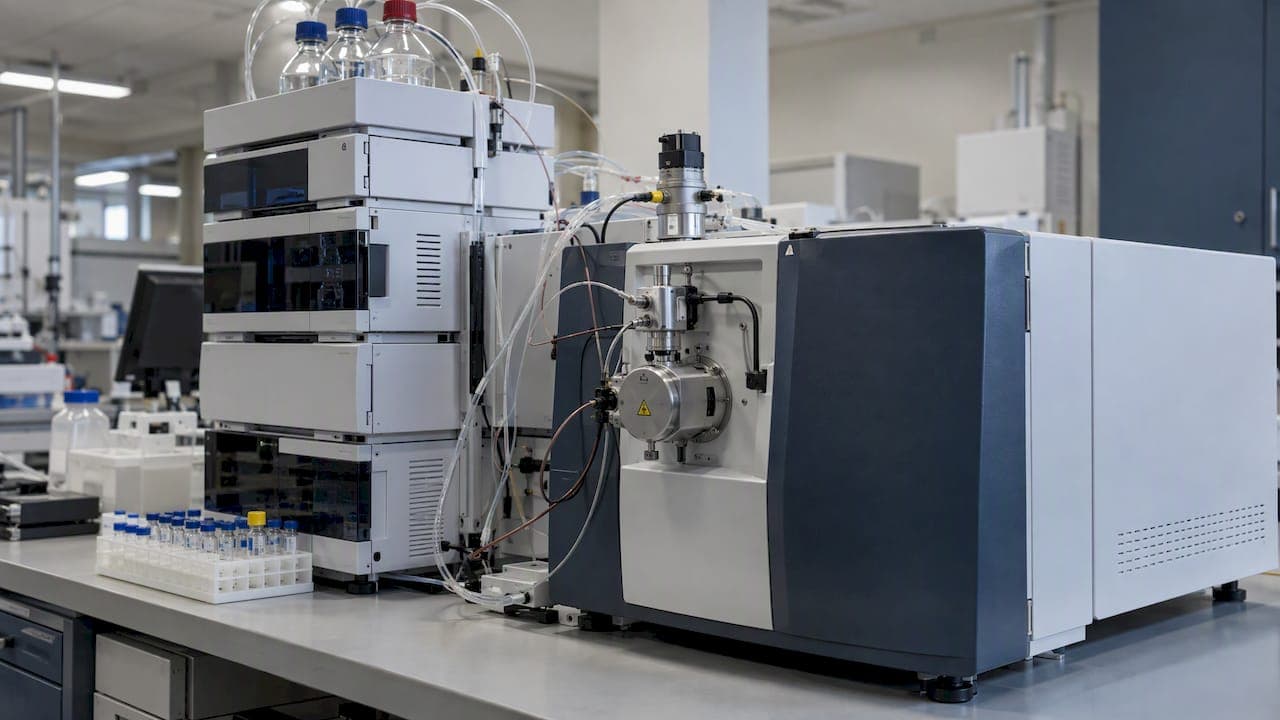
Confirmatory drug testing is the second, more specific lab test that checks a preliminary positive screen. It uses a method such as LC-MS/MS or GC-MS to identify and measure the exact drug or metabolite in the sample. Confirmation either verifies or refutes the screening result, usually with a more specific and more sensitive method that gives quantitative results. A screen is a quick first look. Confirmation is the answer that holds up.
This guide explains how the two steps differ, what happens to your specimen, how reliable the process is, how long results take, and what to do if a screen comes back positive and you think it is wrong.
TL;DR
- A screening test (usually an immunoassay) flags a sample as “presumptive” or “preliminary” positive. A confirmatory test identifies the specific substance and its amount.
- LC-MS/MS and GC-MS separate the sample’s components, then identify each one by its mass. That gives a molecular fingerprint, not a guess.
- Screens can react to look-alike compounds, including some medicines and foods. Confirmation exists to catch those cases.
- Federally regulated workplace programs follow fixed rules, including a Medical Review Officer review. Clinical testing leaves confirmation to the practitioner’s judgment.
- Typical lab turnaround is a few business days for negatives and about five for positives, depending on the lab.
Table of Contents
- Screening vs. confirmation: what each test does
- What “preliminary positive” or “non-negative” means
- How an LC-MS/MS confirmation test works
- What happens to your specimen
- How accurate is confirmatory testing?
- How long confirmation takes
- Workplace testing vs. clinical testing
- Perspective: what we see at the bench
- What to do after a preliminary positive
- Getting tested with EIV Diagnostics
- FAQ
- Sources
Screening vs. confirmation: what each test does
A screening test is built for speed and volume. Most are immunoassays: antibodies bind to a drug or a class of drugs, and the instrument reads a signal. They are quick and inexpensive, and they can run on a point-of-care cup or a lab analyzer.
The tradeoff is specificity. Immunoassays can produce false positives through cross-reactivity with some over-the-counter medicines, prescription medicines and certain foods. That is why a screening result alone is called presumptive or preliminary. It tells you something may be present, not what.
A confirmatory test answers the specific question. It identifies the exact compound and, in most cases, reports a concentration. Confirmation typically runs on more complex laboratory equipment, which is why it costs more and takes longer than a screen.
| Screening test | Confirmatory test | |
|---|---|---|
| Typical method | Immunoassay | LC-MS/MS or GC-MS |
| Main job | Flag samples that may contain a drug or drug class | Identify and quantify the exact drug or metabolite |
| Specificity | Lower, can cross-react | High |
| Result type | Positive or negative above a cutoff | Named substance with a concentration |
| When it runs | Always, first | After a presumptive positive, or when a result is disputed |
What “preliminary positive” or “non-negative” means
These phrases mean the same thing: the screen crossed its cutoff and the result is not yet final. Rapid on-site tests and first-pass lab immunoassays both produce them. Nothing should be acted on from that result alone, whether the setting is a job, a pain clinic, a probation program or a doctor’s office.
In the workplace, a non-negative sample goes to the laboratory for confirmatory testing, then to a Medical Review Officer for the final determination. In a clinic, the physician decides whether to send the sample for confirmation, often because a patient disputes an unexpected result or because the clinician wants the finding tied to treatment. Confirmation in clinical settings is at the practitioner’s discretion.
If you took a prescription or ate something that may have caused a cross-reaction, say so to the person reviewing the result. Foods and medicines are real causes of preliminary positives, and they are exactly the cases confirmation is meant to sort out. We cover two common examples in our guides on poppy seeds and drug tests and the gabapentin drug test.

How an LC-MS/MS confirmation test works
LC-MS/MS stands for liquid chromatography with tandem mass spectrometry. It does two jobs in sequence.
- Separation. The prepared sample passes through a liquid chromatography column. Different compounds travel at different speeds, so the mixture is pulled apart before detection.
- Identification. The separated compounds enter the mass spectrometer, which sorts particles by their mass-to-charge ratio and produces a distinctive molecular fingerprint. The tandem step breaks the ions into fragments and measures those too, which adds a second layer of certainty.
The result names the exact drug molecule or metabolite and measures how much is present. A screen might say “opiates positive.” Confirmation can tell morphine, codeine, hydrocodone and others apart, which matters a great deal when the patient has a legitimate prescription for one of them.
LC-MS/MS vs. GC-MS
GC-MS (gas chromatography-mass spectrometry) is the long-standing standard in regulated workplace testing. DOT regulations call for an immunoassay initial test and GC/MS confirmation. LC-MS/MS follows the same logic with a liquid separation step, which suits compounds that are polar, fragile or hard to vaporize without chemical modification. Many clinical toxicology laboratories use it for that reason. The principle is the same either way: separate first, then identify by mass.

Which method applies depends on the program. A federally regulated test follows the federal rules. A clinical or self-pay test follows the ordering clinician’s choice and the laboratory’s validated methods.
What happens to your specimen
The process is built so that a result can be defended step by step.
- Collection with chain of custody. Strict chain-of-custody forms document every transfer from the collector to the lab. Seals, signatures and dates matter, because a break in the chain can invalidate a result.
- Screening at the lab. The specimen is received, logged and screened.
- Confirmation on a separate portion. Confirmatory tests use a different aliquot of the original specimen, which protects the integrity of the analysis.
- Medical review. In regulated programs, positives go to a Medical Review Officer, whose verification includes donor interviews and possible prescription checks. The Department of Transportation describes the MRO as the “gatekeeper” of the process, balancing program integrity with the donor’s rights.
- Reporting. The verified result goes to the employer, agency or ordering clinician.
The split specimen option
Under DOT rules (49 CFR Part 40), a verified positive or a refusal gives the donor the option to request testing of the split specimen at a second HHS-certified laboratory. The request must be made within 72 hours of notification. If you are in a DOT-regulated job and get a positive, that clock matters. Ask the MRO about it right away.
How accurate is confirmatory testing?
Very accurate when done properly. The Federal Motor Carrier Safety Administration’s guidance says that immunoassay screening combined with GC/MS confirmation is virtually error-free when properly applied. The same guidance notes that the errors which have occurred came from human mistakes in specimen handling or documentation, and that detailed protocols and stringent quality-control checks have reduced laboratory errors.
That tells you where to look when a result seems wrong. The instrument is rarely the weak point. The usual suspects are:
- Collection and paperwork: mislabeled containers, incomplete forms, a broken seal.
- Specimen mix-ups: rare, but the reason the chain of custody exists.
- Interpretation: a real, legitimate presence of a drug from a prescription, which is a medical question, not a lab error.
There is one more point worth knowing for non-federal testing. Many clinical LC-MS/MS tests are laboratory-developed tests. CMS explains that CLIA requires a lab to establish performance characteristics such as accuracy, precision, analytical sensitivity and specificity, and reportable range before releasing results. CMS also notes that validation applies to the conditions, equipment and population of the lab that developed the test. And CLIA covers analytical validity, meaning the test detects what it claims to, but not clinical validity, meaning how well a result diagnoses a condition. In plain terms: confirmation can prove a substance is in the sample. It cannot tell you why it is there or whether the person was impaired.
How long confirmation takes
Turnaround varies by laboratory, workload and shipping time. As one published benchmark, a Navy drug screening laboratory states that negative results are typically released within 3 business days and positives within 5 business days after accession. That is a federal military program, so treat it as a rough guide, not a promise from any other lab.
In workplace testing, add time for the Medical Review Officer’s contact with the donor. In clinical testing, add the time to collect the specimen and get it to the lab. Courier pickup is one place where convenience helps: a specimen collected at home or at work can reach the lab the same day instead of waiting for a trip to a draw site.
Cost depends on the panel, the specimen type and who is paying, so confirm pricing with the lab before ordering. We do not publish a price for toxicology testing here.
Workplace testing vs. clinical testing
The word “confirmation” covers two different worlds.
| Federally regulated workplace | Clinical or self-pay | |
|---|---|---|
| Who decides on confirmation | Federal rules require it for non-negatives | The practitioner or ordering party |
| Chain of custody | Required, formal | Used when the result may be disputed or reported to others |
| Medical review | MRO verifies positives | Treating clinician interprets |
| Split specimen | Donor may request it after a verified positive | Not a standard feature |
| Purpose | Program integrity and safety | Patient care, monitoring, a second opinion |
If you are a patient on a controlled medication, a preliminary positive can feel threatening. In a clinical setting it is usually just a prompt for the clinician to order confirmation and compare the finding with your medication list. In a regulated workplace program, the MRO fills that role, so give them your prescription information promptly.
Perspective: what we see at the bench
We run toxicology as part of a full-service pathology laboratory, and the most common confusion we hear about is the gap between “positive” and “confirmed.” A preliminary positive is a question. A confirmed result is an answer, and it should be read together with a medication history, not in place of one.
Two habits make a real difference. First, tell the lab or reviewing clinician everything you take, including supplements and anything bought over the counter. That context turns a confusing result into a clear one. Second, keep the paperwork from collection. A completed form with intact seals protects you as much as it protects the lab.
As an independent laboratory with board-certified pathologists and CAP-accredited quality standards, we think a result is only as good as the process around it: documented collection, validated methods, and a clinician who can explain what the number means. We would rather you ask a second question than accept a first result you do not understand.
— EIV Diagnostics
What to do after a preliminary positive
- Do not assume the screen is final. Ask whether confirmatory testing has been or will be performed, and by what method.
- List what you took. Prescriptions, over-the-counter products, supplements and unusual foods. Botanical products can matter too: see our guide to the kratom drug test.
- Respond to the reviewer. In a regulated program, speak with the MRO promptly and ask about split-specimen rights and their deadline.
- Request the specifics. Ask which substance was identified and at what concentration, not just “positive.”
- Talk to your clinician. If the result affects your treatment, they can interpret it against your history and decide whether repeat testing makes sense.
Getting tested with EIV Diagnostics
EIV Diagnostics is an independent pathology laboratory in Fresno, serving patients and providers across the Central Valley, including Clovis, Madera, Visalia, Hanford and surrounding communities. Our services include toxicology and clinical pathology testing, and we work with providers, patients who have a prescription, and self-pay customers who want to order tests without a doctor’s visit.
If getting to a draw site is the obstacle, our mobile phlebotomy service brings the draw to your home or office, from $65 per visit. For ordering without a physician’s order, see our self-pay testing page, and read how to order lab tests online and check CLIA status before you buy from any lab.
Providers who need confirmation for a patient, or a laboratory partner for toxicology, can reach us through the services page to discuss methods, specimen types and turnaround for your practice.
FAQ
What is the difference between a screening test and a confirmation test?
A screening test, usually an immunoassay, is a fast first look that flags samples that may contain a drug or drug class. A confirmation test uses a more specific method such as LC-MS/MS or GC-MS to identify the exact substance and measure how much is present. Screens can cross-react with some medicines and foods, so confirmation is what makes a result reliable.
Can a confirmatory test be wrong?
It is uncommon. Federal guidance describes immunoassay screening plus GC/MS confirmation as virtually error-free when properly applied, and says the errors that have occurred were human mistakes in handling or paperwork. Problems usually trace to collection or documentation, so keep your copy of the forms and ask about the chain of custody if you dispute a result.
Does confirmation prove I was impaired?
No. Confirmation shows that a specific substance or metabolite was present at a measured level. It does not show when it was taken or whether you were impaired. A clinician or, in regulated programs, a Medical Review Officer interprets the finding alongside your history and any prescriptions.
How long do confirmation results take?
It depends on the lab and its workload. One federal laboratory reports negatives within 3 business days and positives within 5 business days after the specimen is accessioned. Medical review, shipping and collection time add to that, so ask the lab you use for its own turnaround.
Can I order a drug test without a doctor?
In many cases, yes. Self-pay options exist for people who want testing without a physician’s visit. Check that the lab is CLIA certified and ask whether confirmation is included or billed separately before you order.
Sources
- Clinical Drug Testing in Primary Care (SAMHSA)
- Drug Testing (National Institute on Drug Abuse)
- Medical Review Officer Guidance Manual for Federal Workplace Drug Testing (SAMHSA)
- CLIA Overview: LDTs and CLIA FAQs (CMS)
- ‘Back to Basics’ for Medical Review Officers (US DOT)
- Navy Drug Screening Laboratory Jacksonville FAQs (Navy Medicine)