
August 15, 2026
When to Get a Vitamin D Test: Who Needs One and When
Learn when to get a vitamin D test based on symptoms and risk factors. Understand who needs testing and how it can improve your health.
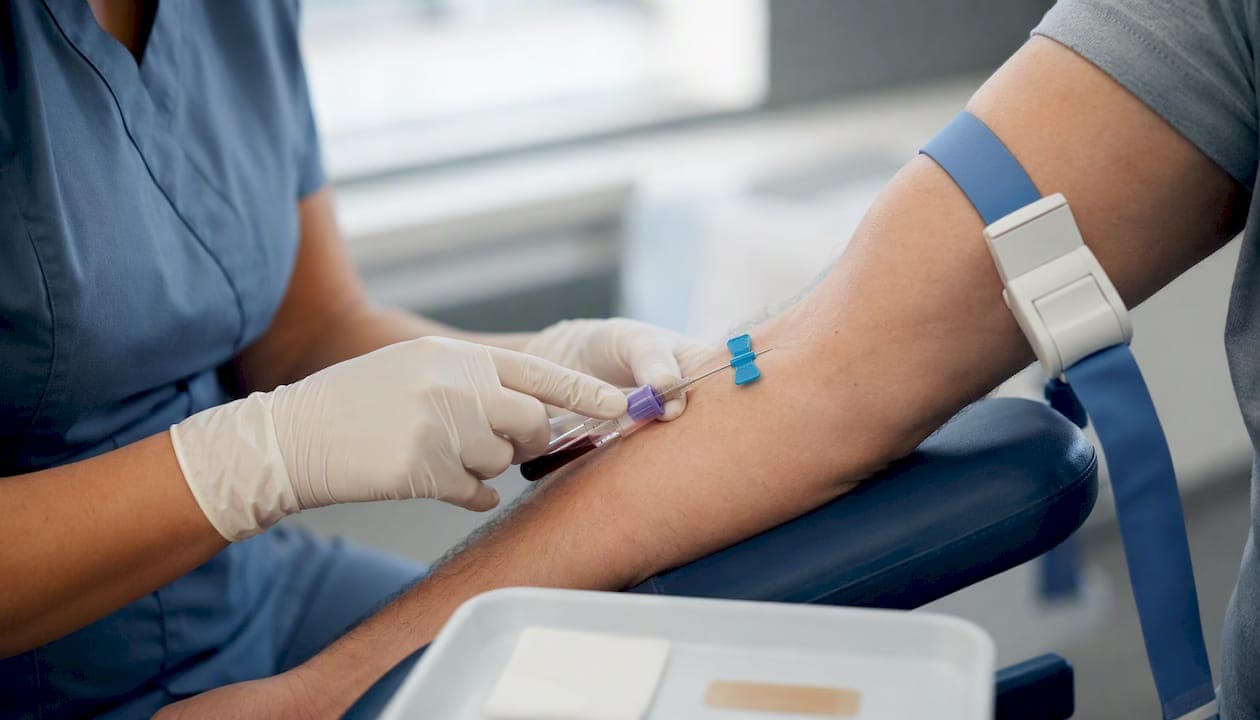
If you have bone pain, muscle weakness, osteoporosis, a malabsorption condition like celiac disease or IBD, or you take long-term corticosteroids or anticonvulsants, a vitamin D test is clinically warranted. The same applies to older adults with limited sun exposure, people with darker skin who live in northern climates, and anyone with a fragility fracture. The test to order is the 25-hydroxyvitamin D (25[OH]D) blood test, the standard measure of vitamin D status recognized by the NIH Office of Dietary Supplements and the Endocrine Society. If you fall into one of these groups, talk to your clinician about testing or order a direct test through EIV Diagnostics if you meet criteria.
Key Takeaways
Testing vitamin D status is clinically warranted for adults with bone pain, muscle weakness, malabsorption conditions, long-term corticosteroid use, or other established risk factors, and the correct test is always 25-hydroxyvitamin D (25[OH]D).
| Point | Details |
|---|---|
| Order the right test | Always request 25-hydroxyvitamin D (25[OH]D), not the active 1,25-dihydroxyvitamin D form. |
| Know the thresholds | NASEM sets sufficiency at 20 ng/mL (50 nmol/L); Endocrine Society targets 30 ng/mL (75 nmol/L) for at-risk groups. |
| Retest at 8–12 weeks | Wait at least 8–12 weeks after starting or changing a dose before retesting; earlier results are unreliable. |
| Avoid routine screening | Asymptomatic, low-risk adults gain no demonstrated outcome benefit from routine vitamin D screening. |
| EIV Diagnostics | Offers direct-access 25(OH)D testing and mobile phlebotomy across the Central Valley, with board-certified pathologist oversight. |
Table of Contents
- Who should get a vitamin D test?
- Which lab test actually measures your vitamin D status?
- How to interpret your 25(OH)D results
- When should you retest after starting vitamin D treatment?
- Why routine vitamin D screening isn’t recommended for everyone
- How to get a vitamin D test in the U.S.
- The case for testing with purpose, not habit
- EIV Diagnostics offers direct-access vitamin D testing with mobile phlebotomy
- Sources
- FAQ
Who should get a vitamin D test?
Clinical guidelines do not support testing everyone. The Cleveland Clinic puts it plainly: providers typically order the 25-hydroxyvitamin D test when a patient has symptoms or identifiable risk factors, not as part of routine bloodwork for healthy adults. A peer-reviewed clinical review published in PMC reinforces this, summarizing the indications for testing and treatment in adults as targeted, not population-wide.
Symptoms that justify testing
- Persistent bone pain or tenderness
- Muscle weakness, aches, or cramps
- Unexplained fatigue
- Mood changes, including depression, that lack another clear cause
- Signs of osteomalacia (bone softening) in adults
Conditions and medications that put you at risk
- Osteoporosis or a fragility fracture (a break from a minor fall or impact)
- Malabsorption syndromes: celiac disease, Crohn’s disease, ulcerative colitis, short bowel syndrome
- Chronic kidney disease or liver disease
- Long-term corticosteroid use (prednisone and similar drugs)
- Long-term anticonvulsant therapy (phenytoin, phenobarbital, carbamazepine)
- Bariatric surgery history
Demographic and lifestyle risk factors
- Age 65 and older, especially if institutionalized or homebound
- Very limited sun exposure year-round
- Darker skin tone with minimal outdoor time in a northern U.S. climate
- Obesity (BMI above 30), since vitamin D is sequestered in fat tissue
- Exclusively breastfed infants whose mothers are deficient (pediatric context)
Pro Tip: Bring any prior vitamin D lab results and a list of current supplements to your appointment. Your clinician can compare trends rather than reacting to a single number, and knowing your supplement dose helps avoid duplicate testing.
Asymptomatic adults with none of these risk factors generally do not need testing. The U.S. Preventive Services Task Force found insufficient evidence to recommend routine screening in that group, a point covered in more detail in the limitations section below.
Which lab test actually measures your vitamin D status?
The correct test is serum 25-hydroxyvitamin D, written as 25(OH)D. This is not the same as 1,25-dihydroxyvitamin D, the active hormonal form. According to the NIH Office of Dietary Supplements, 25(OH)D reflects both endogenous production from sun exposure and dietary or supplemental intake, and it circulates with a half-life of roughly 15 days, making it a stable, reliable marker of overall vitamin D status.
The active form, 1,25-dihydroxyvitamin D, has a short half-life and can be normal or even elevated during deficiency states. It is reserved for specific metabolic or renal investigations, not routine vitamin D assessment.
How laboratories measure 25(OH)D
Two methods dominate clinical labs in the U.S.:
- LC-MS/MS (liquid chromatography-tandem mass spectrometry): Considered the reference standard for accuracy. Distinguishes between D2 and D3 forms.
- Immunoassay: Faster and more widely available, but can yield results that differ from LC-MS/MS by a clinically meaningful margin depending on the assay platform.
The NIH ODS notes that assay variability between laboratories is a real issue. The Vitamin D Standardization Program was developed specifically to improve comparability across labs and methods. This matters when you are tracking trends over time: comparing a result from one lab using immunoassay to a result from a different lab using LC-MS/MS can be misleading. Use the same laboratory when monitoring.
Practical points before your blood draw
- Test name to request: 25-hydroxyvitamin D (25[OH]D), sometimes listed as “Vitamin D, 25-OH, Total”
- Fasting required? No. Time of day does not affect results.
- Sample type: Serum (standard venous blood draw)
- Units: Results may appear in ng/mL or nmol/L. The conversion is straightforward: 1 ng/mL = 2.5 nmol/L. A result of 20 ng/mL equals 50 nmol/L.
How to interpret your 25(OH)D results
Guideline panels do not fully agree on where to draw the line between deficient and sufficient, which is one reason a clinician’s interpretation matters more than a raw number.
| Level (ng/mL) | Level (nmol/L) | Common Label | Guideline Source |
|---|---|---|---|
| Below a low threshold | Below an associated low threshold | Considered deficient or high risk | NASEM/Food and Nutrition Board |
| Low range | Corresponding low range | Considered insufficient | NASEM/Food and Nutrition Board |
| Adequate range | Corresponding adequate range | Considered sufficient for most people | NASEM/Food and Nutrition Board |
| Higher target range | Corresponding higher target range | Recommended for at-risk groups | Endocrine Society |
| Elevated levels | Corresponding elevated levels | Associated with potential adverse effects | NIH ODS caution threshold |
The NIH ODS fact sheet places the sufficiency threshold at 50 nmol/L (20 ng/mL) for most people, while the Endocrine Society recommends a higher target of 75 nmol/L (30 ng/mL) for patients with conditions affecting vitamin D metabolism. Neither threshold is universally accepted, and the debate between 20 and 30 ng/mL is ongoing in the clinical literature.
Factors that affect how your result should be read
- Assay used: Results from different labs or methods are not always directly comparable.
- Season: Levels drawn in late winter are typically lower than those drawn in late summer, even in the same person.
- Obesity: Fat tissue sequesters vitamin D, so a given supplement dose may produce a lower serum level in someone with a higher BMI.
- Chronic disease: Kidney disease, liver disease, and certain granulomatous conditions alter vitamin D metabolism in ways that change how results should be interpreted.
Pro Tip: Ask your clinician which sufficiency target they are using for your specific situation. A 28 ng/mL result might be “sufficient” under NASEM criteria but still prompt treatment under Endocrine Society guidelines if you have osteoporosis.
When should you retest after starting vitamin D treatment?
Timing matters. The University of Washington laboratory guidance is explicit: repeat 25(OH)D testing should not be done within three months of the initial test in most situations, and waiting closer to six months is preferable outside of specific clinical circumstances. Testing too early produces a misleading result because 25(OH)D has a multi-week steady state.
Standard retest timeline
- Start or adjust vitamin D supplementation based on your baseline result and clinician guidance.
- Wait 8–12 weeks before retesting. This window allows 25(OH)D levels to reach a new steady state that reflects your current dose.
- Retest at the same laboratory when possible, using the same assay method, to make trend comparisons valid.
- Adjust dose if needed based on the follow-up result, then retest again after another 8–12 weeks if a further change is made.
When earlier or more frequent monitoring is needed
- Very high-dose therapy (weekly doses of 50,000 IU or higher prescribed for severe deficiency)
- Symptoms suggesting hypercalcemia: nausea, vomiting, confusion, excessive thirst, frequent urination, or kidney pain
- Chronic kidney disease, where vitamin D metabolism is already impaired
- Granulomatous diseases (sarcoidosis, tuberculosis) that can cause unregulated conversion to the active form
The NIH ODS notes that serum concentrations above 125 nmol/L (50 ng/mL) are associated with adverse effects. If you develop any hypercalcemia symptoms while on supplementation, stop the supplement and contact your clinician promptly rather than waiting for a scheduled retest. Serum calcium should be checked alongside 25(OH)D when toxicity is a concern. A comprehensive metabolic panel that includes calcium is a practical way to monitor both simultaneously.
Why routine vitamin D screening isn’t recommended for everyone
Vitamin D testing has become one of the most frequently ordered lab tests in U.S. primary care, often well beyond what guidelines support. Harvard Health notes that primary-care ordering rates have climbed sharply despite a lack of evidence that routine screening improves outcomes in asymptomatic adults. The USPSTF found insufficient evidence to recommend population-wide screening, and major guideline panels consistently emphasize targeted testing for at-risk groups rather than blanket checks.
Reasons not to test asymptomatic, low-risk adults
- No demonstrated reduction in fractures, falls, cardiovascular events, or mortality from screening-detected and treated low vitamin D in otherwise healthy adults
- Guideline uncertainty about optimal thresholds means a “low” result in a healthy person may not require treatment
- Seasonal and assay variability can produce transient low values that normalize without intervention
- Lab reporting differences mean a result flagged as low by one lab’s reference range may be within normal limits at another
Limitations of the test itself
Assay variability is not a minor footnote. The Vitamin D Standardization Program exists because immunoassay platforms can diverge from LC-MS/MS results by enough to shift a patient’s category from insufficient to sufficient or vice versa. A single low result in an otherwise healthy person, especially drawn in February, deserves clinical context before triggering a treatment decision.
Harms from unnecessary supplementation
Vitamin D toxicity from food alone is essentially impossible, but high-dose supplements are a different matter. Toxicity causes hypercalcemia, with symptoms including nausea, confusion, weakness, and, in severe cases, kidney damage. The NIH ODS identifies serum concentrations above 125 nmol/L (50 ng/mL) as the range where adverse effects become a concern. Over-supplementing based on an unnecessary or misinterpreted test result is a real clinical risk, not a theoretical one.
How to get a vitamin D test in the U.S.
Getting tested is straightforward once you know which route fits your situation. The 25-hydroxyvitamin D blood test is a standard serum draw with no fasting requirement and no special preparation.
Ordering routes
- Primary care provider order: The most common path. Your clinician orders the test, it is often covered by insurance when medically indicated, and results flow back to your chart for interpretation.
- Specialist order: An endocrinologist, rheumatologist, or nephrologist may order the test as part of managing a related condition.
- Direct-to-consumer / self-pay: You order the test without a physician’s order, pay out of pocket, and receive results directly. This is useful when you want to test proactively or when you do not have a current provider relationship. EIV Diagnostics offers this pathway.
- Mobile phlebotomy: A phlebotomist comes to your home or office for the blood draw. EIV Diagnostics provides this service across Fresno, Clovis, Madera, Visalia, and surrounding Central Valley communities.
Cost and insurance
When a provider orders the test for a documented clinical indication, most insurance plans cover it. Self-pay costs for a 25(OH)D test vary; checking with the lab directly gives you the clearest picture. For a broader look at affordable lab testing options, comparing direct-access labs is worth the few minutes it takes.
What to expect from the report
Turnaround time for a 25(OH)D result is typically 1–3 business days from the time the sample reaches the lab. Your report will list the numeric result in ng/mL or nmol/L alongside the lab’s reference range. CLIA-regulated labs with board-certified pathologist oversight provide an additional layer of quality assurance, which matters given the assay variability discussed earlier. For patients in the Central Valley, EIV Diagnostics offers fast turnaround testing with results reviewed by board-certified pathologists.

Pro Tip: If you are ordering a vitamin D test for the first time, consider pairing it with a basic metabolic panel that includes calcium. It gives your clinician a fuller picture and is useful baseline data if you later start supplementation.
Some lab testing pathways, such as those used in immigration medical exams, include specific laboratory testing panels that may incorporate vitamin D assessment depending on the clinical context of the evaluation.
The case for testing with purpose, not habit
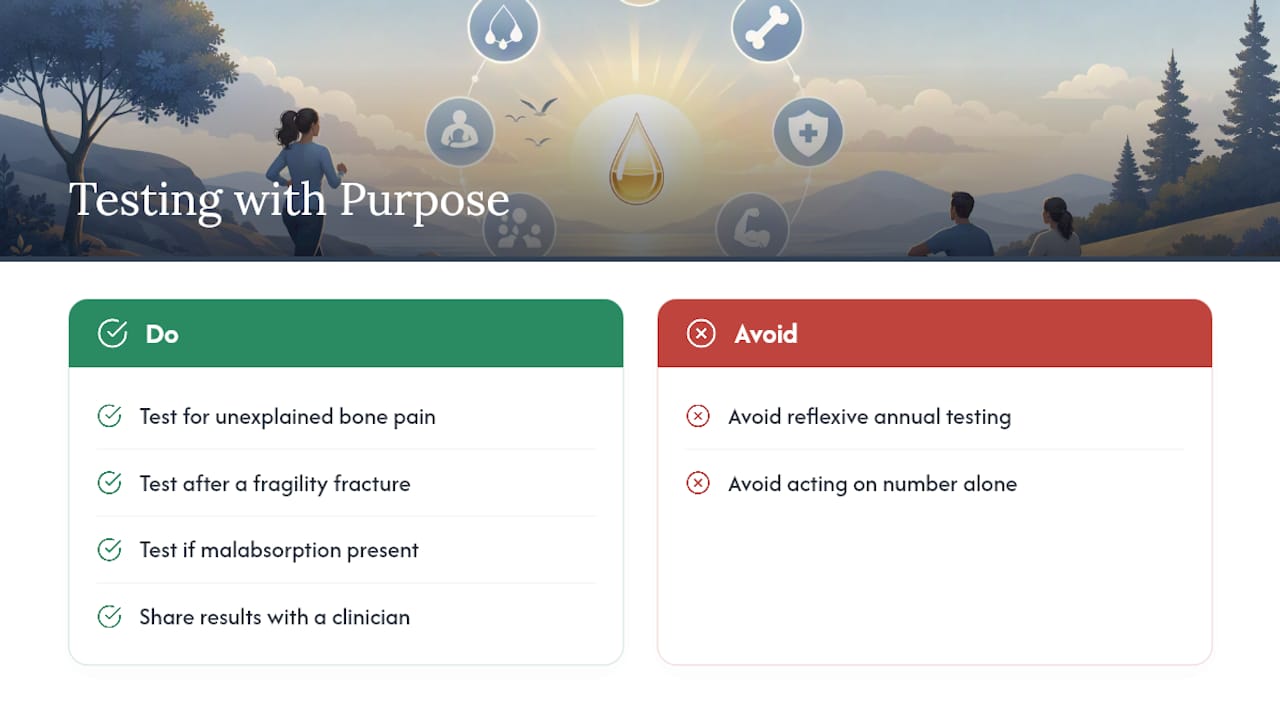
At EIV Diagnostics, the pattern we see is consistent with what the data shows nationally: vitamin D testing is most useful when it answers a specific clinical question, not when it is added reflexively to an annual panel. A result without context, ordered for a healthy adult with no risk factors, rarely changes management. But for someone with unexplained bone pain, a recent fragility fracture, or a malabsorption condition, that same test can shift the entire treatment approach.
The lab’s role is to deliver an accurate, timely result. What happens next depends on how that result is interpreted within the full clinical picture. A 22 ng/mL result means something different for a 70-year-old with osteoporosis than for a 35-year-old with no risk factors. That is why we consistently encourage patients who order direct-access testing to share results with a clinician who knows their history, rather than acting on a number alone.
EIV Diagnostics offers direct-access vitamin D testing with mobile phlebotomy
Skip the wait for a provider order when you have a clear clinical reason to test. EIV Diagnostics is an independent, CLIA-regulated pathology laboratory in Fresno, CA, staffed by board-certified pathologists. You can order a clinical pathology test directly, with or without a physician’s order, and choose mobile phlebotomy if you prefer the blood draw at your home or office. Results are reviewed by board-certified pathologists and returned with fast turnaround times, serving patients across Fresno, Clovis, Madera, Visalia, Hanford, Tulare, and surrounding Central Valley communities.
Ready to order? Visit EIV Diagnostics to place a direct-access test order or schedule mobile phlebotomy for your 25-hydroxyvitamin D test today.
Sources
- Vitamin D Test - MedlinePlus
- Vitamin D - Health Professional Fact Sheet (ODS/NIH)
- Should I get my vitamin D levels checked? - Harvard Health
- Vitamin D deficiency in adults: When to test and how to treat - PMC
- Vitamin D Testing Recommendations | Laboratory Test Guide
This article is general information, not a substitute for advice from a qualified doctor. Consult a qualified healthcare professional about your own circumstances before acting on anything here.
FAQ
Why don’t doctors routinely check vitamin D levels?
Most clinical guidelines, including the USPSTF position, do not support routine vitamin D screening in asymptomatic adults because there is no demonstrated evidence that detecting and treating low levels in otherwise healthy people improves outcomes like fracture rates or cardiovascular health.
Is vitamin D measured in a standard CBC?
No. A complete blood count (CBC) does not include vitamin D. You need a separate order specifically for 25-hydroxyvitamin D (25[OH]D), which is a serum chemistry test, not a hematology panel.
How can I tell if my vitamin D is low without a test?
You cannot reliably tell from symptoms alone, since many people with low 25(OH)D levels are completely asymptomatic. Bone pain, muscle weakness, and fatigue can suggest deficiency, but these symptoms overlap with many other conditions, making a blood test the only way to confirm.
What are common signs of vitamin D deficiency?
Bone pain or tenderness, muscle weakness and cramps, unexplained fatigue, and mood changes including depression are among the most frequently reported symptoms. Severe, prolonged deficiency can cause osteomalacia in adults. A 25(OH)D test below 12 ng/mL (30 nmol/L) is the threshold NASEM identifies as high risk for deficiency.
Can I order a vitamin D test without a doctor’s order?
Yes, in most U.S. states. Direct-to-consumer lab testing allows you to order a 25(OH)D test and pay out of pocket without a physician’s order. EIV Diagnostics offers this pathway, along with mobile phlebotomy, for patients across the Central Valley who want to order their own labs directly.
Recommended
- 1,3 Beta D-Glucan Test: What You Need to Know | EIV Diagnostics | EIV Diagnostics
- Direct Access Lab Testing: Order Your Own Labs Today | EIV Diagnostics | EIV Diagnostics
- How to Get Blood Work Done Without a Doctor | EIV Diagnostics | EIV Diagnostics
- Fast Testing Results: What Patients in Clovis Need to Know | EIV Diagnostics | EIV Diagnostics