
By EIV Diagnostics · November 3, 2026
Urine Culture Time: How Long Results Take and Why
A urine culture usually takes 24 to 48 hours to grow and up to 3 days for a final report. See what affects the wait and how to avoid delays.
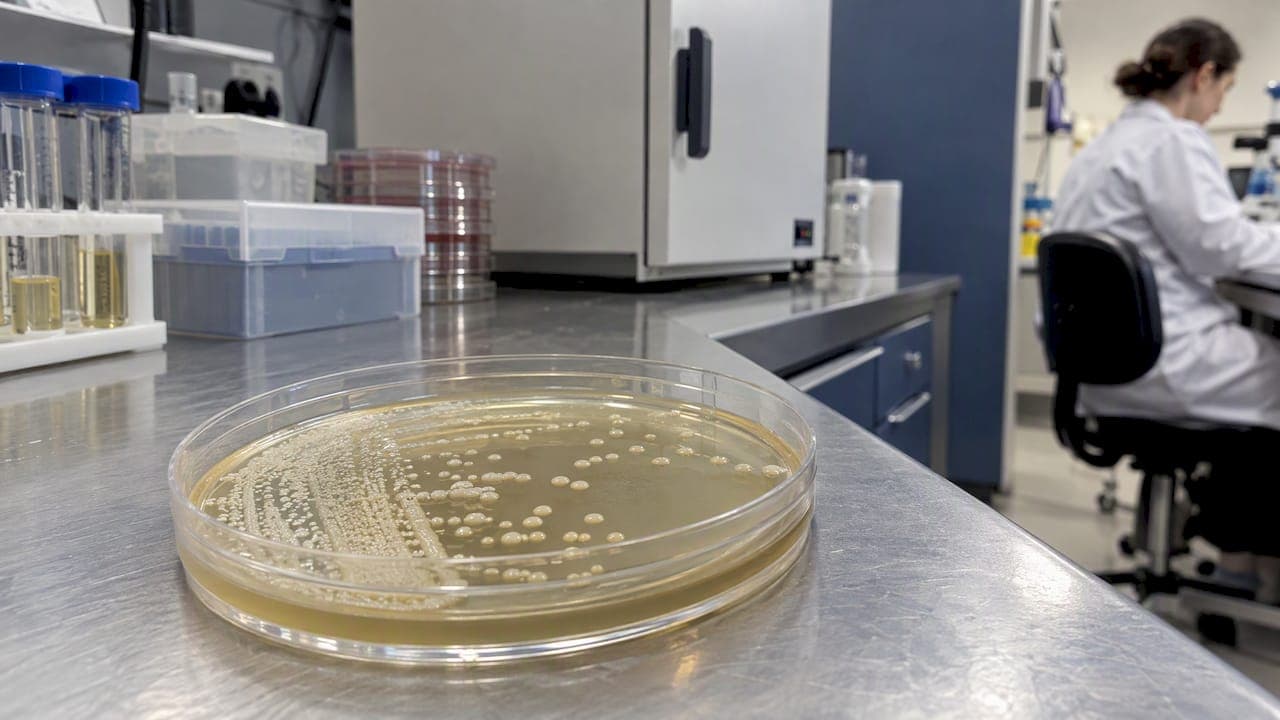
A urine culture usually takes 1 to 3 days from the moment the lab receives your sample. Bacteria need 24 to 48 hours to grow on a nutrient plate, and it can take up to three days for the lab to finish the test and send results back. If the lab also has to test which antibiotics work against the organism, the final report can take a little longer. The clock starts when the lab gets the specimen, not when you leave the cup in the bathroom, so how and when the sample travels matters as much as the lab’s own work.
This guide explains each stage of the wait, what can stretch it, how to read a negative or positive result, and how to make sure the sample reaches the lab in good shape.
TL;DR
- Plan on 24 to 48 hours for growth and up to 3 days for a complete report with identification and antibiotic sensitivity.
- Some labs send a preliminary finding within one business day, with the final identification and susceptibility results in 2 to 3 business days.
- Turnaround is counted from lab receipt. Slow transport, warm storage or a mislabeled cup can add days.
- A clean-catch sample, kept cold and delivered promptly, is the best way to avoid a repeat test.
- Ongoing symptoms with a negative culture are a reason to call your clinician, not to wait.
Table of Contents
- How long a urine culture takes, step by step
- Why a culture takes longer than a routine urine test
- What can slow your urine culture results
- How to collect a sample that gets answered the first time
- Reading your result
- Our perspective on getting faster, steadier results
- Getting tested in the Fresno area
- How this compares with other lab waits
- A practical checklist before you collect
- FAQ
- Sources
How long a urine culture takes, step by step
The timeline has four parts. Each has its own clock.
| Stage | What happens | Typical time |
|---|---|---|
| Collection and transport | You provide a sample, and it is delivered to the lab | Same day, ideally within hours |
| Setup | A technician spreads urine on nutrient agar and places it in an incubator | Within the first day of receipt |
| Growth and counting | Colonies develop and are counted | 24 to 48 hours |
| Identification and sensitivity | The organism is identified and tested against antibiotics | Roughly 2 to 3 business days in total |
The Solano County public health laboratory guide describes this pattern: preliminary colony-count and Gram-stain findings are typically faxed within one business day after the specimen is received, while final identification and susceptibility results are usually reported within 2 to 3 business days. The MSD Manual puts the detailed organism-specific and antibiotic-sensitivity information at at least 2 to 3 days.
Those are typical figures, not promises. Individual laboratories set their own reporting schedules, and weekends and holidays count differently. If you want an exact answer, ask the lab or the office that ordered the test when results are usually posted.
What “incubation time” means
Incubation is the stretch when the plate sits in a warm incubator so any bacteria or yeast can multiply into colonies you can see and count. Per Cleveland Clinic, a technician spreads the urine onto nutrient agar with a loop, incubates it, and examines and counts the colonies that grow over one to two days. That one to two days is the incubation window, and it is the part of the wait no lab can shorten, because the bacteria set the pace.
Preliminary versus final results
A preliminary result is an early read. It might say that growth is present and give a rough colony count, or that nothing has grown yet. A final result names the organism and, when relevant, lists which antibiotics stop it. Your clinician may start treatment based on the preliminary report and the symptoms, then adjust once the final report arrives. If the preliminary note says “no growth” at 24 hours, many labs still hold the plate for a second day before calling it negative.
Why a culture takes longer than a routine urine test
A routine urinalysis looks at the urine itself, using a dipstick or a microscope, and can often be done the same day. A culture does something different: it grows whatever living organisms are in the sample. Cleveland Clinic notes that, unlike quicker urinalysis screening, culture grows microorganisms and identifies the specific organism.
MedlinePlus explains that culture tests take time because the sample has to produce enough bacterial cells to identify. Most disease-causing bacteria reach testable numbers in one to two days, but some grow slowly and may take several days or longer.
Here is how the two tests compare in practice:
| Urinalysis | Urine culture | |
|---|---|---|
| Question answered | Are there signs of infection or other changes? | Which organism is present, and what kills it? |
| Method | Dipstick and microscope | Growth on nutrient plate, then identification |
| Speed | Often same day | 1 to 3 days |
| Guides antibiotic choice | Only roughly | Yes, through sensitivity testing |
If you are curious about what the microscope part shows, our guide to the urine microscopic exam walks through the cells and crystals a lab looks for.
What can slow your urine culture results
The growth time is fixed. Almost everything else is not. These are the delays we see patients run into most.
Transport and storage
The Solano County protocol shows that turnaround is measured from receipt by the laboratory, so a sample that sits in a car or a drop box adds to your real-world wait. The same guide says specimens should be shipped refrigerated and received within 24 hours of collection, and that urine in a sterile container may be stored for up to 2 hours at room temperature or 24 hours refrigerated before testing. A sample that waits too long warm can give a misleading count, and some labs reject it and ask for a new one. That resets the whole clock.
Contamination
Skin and genital bacteria can get into a sample as it is collected. Cleveland Clinic warns that contamination with bacteria or yeast from the skin can produce inaccurate, false-positive results. A contaminated culture often grows several organisms at low counts, which prompts a repeat sample and adds days.
Slow-growing organisms
Some organisms need more than two days, as MedlinePlus notes. If your clinician suspects a less common cause, the lab may hold the plate longer or use extra tests.
Paperwork and logistics
A missing order, a mismatched name on the label or a Friday afternoon drop-off can each cost a day. Confirm the order is complete before you collect, and check the lab’s weekend schedule if you are testing near one.
How to collect a sample that gets answered the first time
A good sample saves more time than any fast courier. Follow the instructions your clinician or lab gives you, and use these as general practice:
- Wash your hands and open the sterile cup without touching the inside.
- Clean the genital area as directed in the kit.
- Start urinating into the toilet, then collect the midstream portion in the cup.
- Close the lid, label the cup with your name and the collection time, and keep it cold.
- Get it to the lab or the collection team the same day.
First-morning urine is often preferred because bacteria have had hours to build up in the bladder. If you cannot collect then, a sample after at least four hours without urinating is a common alternative. Tell the lab if you have started antibiotics, since that can suppress growth and cause a false negative.
Reading your result
Negative. No bacteria or yeast were detected. Cleveland Clinic says that if symptoms persist despite a negative result, more testing, imaging or a urology referral may be warranted. Do not simply wait it out.
Positive with symptoms. Growth together with symptoms such as burning, urgency or lower abdominal pain points to a urinary tract infection. The sensitivity panel then shows which antibiotics are likely to work, and your clinician chooses among them.
Positive without symptoms. Bacteria found when you feel fine may be asymptomatic bacteriuria, which usually does not require treatment. Your clinician decides, since some situations, such as pregnancy, are handled differently.
Mixed growth. Several organisms at low counts often signal contamination. Expect a request to recollect.

See a clinician promptly, without waiting for the culture, if you have fever, flank or back pain, vomiting, blood in the urine, or if the person with symptoms is a child, pregnant, or has a weakened immune system. Seek urgent care for high fever with shaking chills or confusion.
Our perspective on getting faster, steadier results
Most of the delay in a urine culture is not in the lab. It is in the hours between the bathroom and the bench. Growth time is biology, and no one can hurry it, but sample handling is something we can control.
That is why we pay as much attention to collection and transport as to analysis. EIV Diagnostics is an independent pathology laboratory in Fresno, and our model is built around shortening the gap between the patient and the pathologist. Our mobile phlebotomy team brings lab collection to a home or office, which removes a trip and a lot of the guesswork about storage and timing.
Our approach is designed around board-certified pathologists, CAP-accredited quality standards and rapid turnaround, so that once a specimen reaches us, it moves without stalls. For patients, that means a clearer plan and fewer repeat visits. For providers, it means reports that arrive when they can still shape the decision.
EIV Diagnostics
Getting tested in the Fresno area
If you live or work in Fresno, Clovis, Madera, Visalia or nearby, you do not have to build the logistics yourself. EIV Diagnostics offers lab testing for patients with a physician’s order, for providers, and for people who prefer to self-pay. Mobile phlebotomy is available from $65 per visit, and a collector can come to your home or office at a time that suits you.
If you already have an order, book mobile phlebotomy to have your sample collected where you are. If you want to test without a doctor’s visit, see how self-pay testing works, and ask us whether the specific test you need is available before you schedule. For the broader picture of what we run in-house, our clinical pathology page lists the categories.
How this compares with other lab waits
Urine culture is one of the slower routine tests because it depends on growth. Other tests move on different clocks. Rapid chemistry panels can post in hours, while tissue work takes days because of processing. If you are weighing timelines across tests, our guides on same-day lab results, drug test turnaround and how long biopsy results take show how each one is paced. For infections that are not in the urine, such as a stubborn wound, wound infection PCR explains a molecular approach that does not depend on waiting for a culture plate.
A practical checklist before you collect
- Confirm the exact test name on your order: “urine culture” is not the same as “urinalysis.”
- Ask how the lab wants the sample stored and how long it can wait.
- Tell the lab about any antibiotics you have taken in the last few days.
- Collect the sample close to the pickup or drop-off time.
- Ask when preliminary and final results are usually available, and how you will be notified.
- Write down the name and phone number of the office that will interpret the result.
These six items take five minutes and prevent most avoidable repeats.
FAQ
How long does a urine culture take to come back?
Most results take 1 to 3 days after the lab receives the sample. Bacteria need 24 to 48 hours to grow, and identification plus antibiotic testing can push the final report to the third day. Your clinician’s office may have a preliminary read sooner.
What is the urine culture incubation time?
The plate is typically incubated for one to two days so colonies can grow and be counted. Slower-growing organisms can need longer, and the lab may hold the plate if your clinician suspects one.
How much blood is drawn, and how many vials do I need?
A urine culture does not need blood at all, only a urine sample. If your order also includes blood tests, the number of vials depends on the specific tests, and the phlebotomist will tell you before the draw. Ask the ordering office or the lab if you want to know in advance.
Can I get results faster by dropping off the sample myself?
Often, yes, because the clock runs from lab receipt and a prompt, cold delivery avoids storage problems and rejected samples. It will not shorten the one to two days of growth. Collecting at the right time and keeping the sample cold is what helps.
What if my culture is negative but I still have symptoms?
Contact your clinician. Persistent symptoms after a negative culture can call for more testing, imaging or a urology referral, and the cause may be something other than a common bacterial infection.
Sources
- Urine Culture: What It Is, Purpose, Procedure & Results, Cleveland Clinic
- Urine culture and antibiotic susceptibility, Solano County
- Urinalysis and Urine Culture, MSD Manual
- Bacteria Culture Test, MedlinePlus