
By EIV Diagnostics · August 9, 2026
Lab Tests Without Insurance: Your Self-Pay Guide
Discover how to get lab tests without insurance quickly and affordably. Order directly from certified labs, save money, and receive results fast.
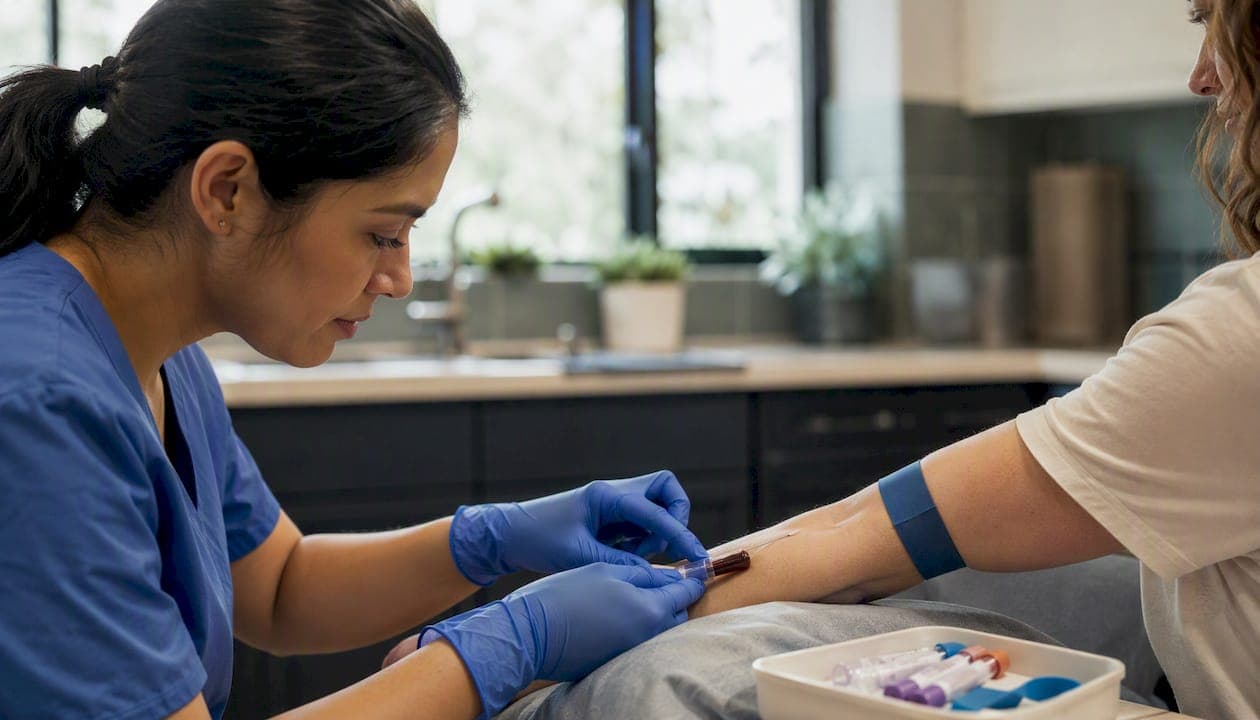
You can get lab tests without insurance right now. Most Americans can order common blood panels directly from a CLIA-certified lab, pay cash, and have results in 1–3 business days, no doctor’s visit required. The industry term for this is direct access testing (DAT), and it’s legal in most U.S. states. The fastest path: pick your tests, confirm the lab holds a valid CLIA certificate, and schedule a draw.
Here’s what you need to know before you order:
- Direct-to-consumer (DAT) ordering lets you authorize your own tests online. A licensed physician reviews and signs off on the order; you never need to see a doctor in person.
- Self-pay at independent labs is often 60–80% cheaper than the same test billed through a hospital.
- CLIA certification is the federal quality standard that guarantees your results are processed under the same accuracy requirements as any provider-ordered test.
- EIV Diagnostics is a CLIA-certified independent pathology lab in Fresno, CA, that accepts self-pay patients with or without a doctor’s order, and offers mobile phlebotomy for home or office draws.
Pro Tip: Before you order, write down the specific tests you want (e.g., CBC, A1C, lipid panel) and compare cash prices across at least two providers. Bundled wellness panels almost always cost less than ordering each test separately.
Key Takeaways
Getting lab tests without insurance is straightforward when you know where to look: CLIA-certified independent labs and DTC services offer the same accuracy as hospital labs at a fraction of the cost.
| Point | Details |
|---|---|
| DAT is legal in most states | Direct access testing lets you order common panels without a doctor’s visit in most U.S. states. |
| Cash prices are much lower at independent labs | Common tests like CBC ($15–$50) and CMP ($20–$75) cost far less outside hospital systems. |
| CLIA certification is non-negotiable | Always verify a lab’s CLIA certificate before ordering; it guarantees federally regulated accuracy standards. |
| HSA/FSA funds apply | Lab tests are a qualified medical expense; pay with your health savings account and save receipts. |
| EIV Diagnostics accepts self-pay patients | EIV Diagnostics offers CLIA-certified, board-certified pathologist-reviewed testing with mobile phlebotomy and no insurance required. |
Table of Contents
- How do lab tests without insurance actually work?
- Which common lab tests can you order without a doctor?
- How much do lab tests cost without insurance?
- Are self-pay lab results accurate? What the regulations say
- How to choose a trustworthy self-pay lab provider
- What EIV Diagnostics offers for self-pay patients
- A note on patient access from EIV Diagnostics
- Ready to order? Here’s how EIV Diagnostics works for self-pay patients
- Sources
- FAQ
How do lab tests without insurance actually work?
The process is simpler than most people expect. Here’s the typical flow for a direct-to-consumer lab order:
- Choose your tests online. Select from a menu of available panels on the lab or DTC platform’s website. Most list cash prices upfront.
- Physician authorization. A licensed physician affiliated with the lab reviews your order and authorizes it. You don’t pay for an office visit; this step is built into the DTC service.
- Schedule sample collection. Pick from three options: walk into a local draw station, book a mobile phlebotomist to come to your home or office, or use an at-home collection kit (available for certain tests).
- Sample processing. Your sample goes to a CLIA-certified lab. For most common panels, processing takes 1–3 business days according to DTC ordering guides.
- Receive results. Results are delivered through a secure online portal. You get the same report a clinician would receive, including reference ranges.
- Follow up if needed. If a result is abnormal or flagged as a critical value, the lab is required to notify the requesting party. Consult a clinician for any result outside the normal range.
Sample collection options differ in convenience and cost:
- In-lab draw stations are the most common and typically have no additional draw fee or a small one.
- Mobile phlebotomy brings a certified phlebotomist to you. Expect an additional service fee, but no travel time or waiting room.
- At-home collection kits work for certain tests (some hormone panels, some STD tests) but are not compatible with high-complexity assays that require venipuncture or controlled handling conditions.
Which common lab tests can you order without a doctor?
The list is longer than most people realize. Routine wellness panels are widely available for self-pay lab testing:
- Complete Blood Count (CBC): Screens for anemia, infection, and immune conditions.
- Comprehensive Metabolic Panel (CMP): Checks kidney function, liver enzymes, blood sugar, and electrolytes.
- Lipid panel: Measures total cholesterol, LDL, HDL, and triglycerides. MedlinePlus provides reference ranges for interpreting your results.
- Hemoglobin A1C: Reflects average blood sugar over roughly 3 months. The CDC recommends A1C screening for adults at risk for prediabetes or diabetes; an A1C of 5.7%–6.4% indicates prediabetes, and 6.5% or higher indicates diabetes.
- TSH (thyroid-stimulating hormone): The standard first screen for thyroid dysfunction.
- Vitamin D (25-OH): Commonly low in adults who spend limited time outdoors.
- Vitamin B12 and iron panel: Useful for fatigue workups.
Beyond routine wellness, many providers also offer:
- STD screening panels (HIV, syphilis, gonorrhea, chlamydia, hepatitis B and C)
- Testosterone and hormone panels (total testosterone, estradiol, DHEA-S)
- Drug screens (urine or oral fluid)
- Specialty chemistry panels (ferritin, CRP, homocysteine)
One important distinction under CLIA: waived tests use simple, low-risk methods (like a fingerstick glucose) and require only a Certificate of Waiver. Non-waived tests (moderate or high complexity) require a higher-level CLIA certificate and more rigorous quality controls. Most at-home kits cover waived tests only. If you need a high-complexity panel, you’ll need a venipuncture draw processed at a certified lab.
How much do lab tests cost without insurance?
Cash prices vary widely depending on where you order. The single biggest driver of cost is whether you go through a hospital system or an independent lab.
Aggregated cash price data shows typical self-pay ranges for common tests:
- CBC: $15–$50
- CMP: $20–$75
- Lipid panel: $25–$80
- A1C: $20–$75
- TSH: roughly $20–$60
- Vitamin D: roughly $30–$80
- STD panel (basic): $80–$200 depending on the number of markers
GoodRx’s cost overview notes that many routine blood tests fall in the $29–$99 range for self-pay patients. The gap between DTC pricing and hospital pricing is where the real savings live. Independent DTC pricing for tests like CBC and CMP is often in the $28–$69 range, while the same tests billed through a hospital can run several hundred dollars once facility fees and chargemaster markups are added.
Why hospital labs cost so much more: Hospitals apply a “chargemaster” rate to every service, then negotiate discounts with insurers. Uninsured patients often get billed the full chargemaster rate. Independent labs and DTC platforms skip that layer entirely.
Practical ways to lower your out-of-pocket lab fees:
- Order DTC or through an independent lab rather than a hospital outpatient lab.
- Choose bundled wellness panels over individual tests. A “comprehensive wellness panel” covering CBC, CMP, lipid, A1C, and TSH together typically costs less than ordering each test separately.
- Use your HSA or FSA. Lab tests are a qualified medical expense; pay with your health savings account card and save the receipt.
- Check Fair Health Consumer for local price estimates before you commit to a provider.
- Avoid the ER for routine testing. An ER visit adds a facility fee that can dwarf the actual test cost.
Pro Tip: Ask the lab for a bundled panel price before ordering individual tests. A “basic metabolic panel” is almost always cheaper than ordering glucose, BUN, creatinine, and electrolytes as separate line items.
Are self-pay lab results accurate? What the regulations say
Accuracy is not inherently lower for self-pay orders. The same CLIA-certified equipment and procedures apply whether a physician ordered the test or you did.
Under CLIA regulations for direct access testing, labs performing DAT must hold the appropriate CLIA certificate for the complexity of tests they run and follow CLIA procedures for all phases of testing, including pre-analytical, analytical, and post-analytical steps. Labs are also required to alert the requester about any panic or life-threatening values.
That said, a few real risks exist:
- Preanalytical errors: Fasting requirements, sample handling, and collection timing all affect results. A lipid panel drawn after a meal, for example, will not reflect your true fasting triglycerides.
- Test selection: Ordering the wrong test for your symptoms is a clinical judgment call. A TSH alone won’t catch all thyroid conditions; a CBC won’t diagnose the cause of fatigue on its own.
- No clinical follow-up built in: DTC services deliver results, but they don’t interpret them for you. An abnormal result needs a clinician’s eye.
On state-level rules: DAT is legal in most U.S. states, but some states restrict certain tests or require a clinician’s involvement for specific panels. New York and New Jersey, for instance, have historically required physician authorization for certain tests even in DTC contexts. Check your state’s DAT rules before ordering a sensitive panel.
How to choose a trustworthy self-pay lab provider
Not every lab advertising “no insurance needed” is equally safe or transparent. Use this checklist when comparing options.
Must-have checks:
- Valid CLIA certificate (ask for the certificate number; verify at the CMS CLIA database)
- Board-certified pathologists or a licensed medical director overseeing testing
- Transparent, published cash pricing with no hidden facility fees
- Clear specimen collection options (in-lab, mobile, or kit)
- Secure results portal with stated turnaround times
- HIPAA-compliant data handling
Red flags to walk away from:
- No CLIA information listed anywhere on the site
- Pricing that only appears after you enter payment details
- No mention of physician authorization for non-waived tests
- Vague result delivery (“we’ll contact you”) with no portal access
- No published medical director or pathologist credentials
Questions to ask before you order:
- Where is my sample processed, and what CLIA certificate does that lab hold?
- What is the total out-of-pocket cost, including any draw fee or mobile phlebotomy charge?
- How are results delivered, and how long does it take?
- Is mobile phlebotomy available in my area?
- What happens if a result is critically abnormal?
Pro Tip: Search the CMS CLIA database with the lab’s name or address to confirm its certificate type and current status before you order. It takes 30 seconds and tells you exactly what complexity of testing that facility is certified to perform.
What EIV Diagnostics offers for self-pay patients
EIV Diagnostics is an independent pathology laboratory in Fresno, CA, built to serve both providers and patients who want to order lab tests without a doctor’s order. For uninsured patients, the practical advantages are concrete.
Services available for self-pay patients:
- Direct-to-consumer test ordering with no insurance required
- CLIA-certified laboratory processing for all test categories
- Board-certified pathologists overseeing every result
- Mobile phlebotomy for home or office draws, eliminating the need to travel to a draw station
- Transparent cash-pay pricing and bundled wellness packages
- Rapid turnaround, with results delivered through a secure online portal
- HSA and FSA payment accepted
Accuracy at EIV Diagnostics comes from the same CLIA-certified processes and board-certified pathologist oversight that providers rely on, applied equally to every self-pay order.
EIV Diagnostics handles the full spectrum of clinical pathology services, from routine blood panels to specialty testing including molecular pathology, toxicology, and pharmacogenomic testing. For patients who need more than a basic wellness panel, that depth matters.
A note on patient access from EIV Diagnostics
Every patient deserves accurate lab results, regardless of insurance status. At EIV Diagnostics, we built our self-pay model specifically so that cost and coverage gaps don’t become barriers to knowing what’s happening in your body. Mobile phlebotomy means you don’t need transportation or time off work to get a blood draw. Clinical interpretation support means you’re not left alone with a result you don’t understand. Our CLIA-certified lab and board-certified pathologists provide the same standard of oversight for a $40 self-pay CBC as for any provider-ordered panel.
Ready to order? Here’s how EIV Diagnostics works for self-pay patients
Skip the insurance maze entirely. With EIV Diagnostics, the process is direct: choose your tests, authorize your order, schedule a draw at a location that works for you (or have a phlebotomist come to you), and receive results through a secure portal, typically within 1–3 business days.
Self-pay packages cover routine wellness panels, specialty testing, and everything in between. Mobile phlebotomy is available for patients who can’t or prefer not to travel to a draw station. Cash pricing is published upfront, with no surprise facility fees.
To get started, visit EIV Diagnostics’ clinical pathology services page to see available panels and current self-pay pricing, or contact the lab directly to ask about bundled wellness packages and mobile draw availability in your area.
Sources
The following sources were used in this article and are worth bookmarking for your own research:
- Direct Access Testing (DAT) and the Clinical Laboratory Improvement Amendments (CLIA) Regulations
- Blood Test Cost — With & Without Insurance (2026 Prices)
- How Much Does Blood Work Cost Without Insurance?
- Medlineplus
- Cdc
- Fairhealthconsumer
This article provides general health information, not medical advice. Confirm current state DAT rules and consult a qualified healthcare professional for any abnormal results or medical decisions.
This article is general information, not a substitute for advice from a qualified doctor. Consult a qualified healthcare professional about your own circumstances before acting on anything here.
FAQ
Can you order lab tests without insurance or a doctor?
Yes. Direct access testing (DAT) allows most U.S. residents to order many common lab tests without a physician’s referral; a licensed physician affiliated with the lab typically authorizes the order as part of the DTC service.
How much do out-of-pocket lab tests cost?
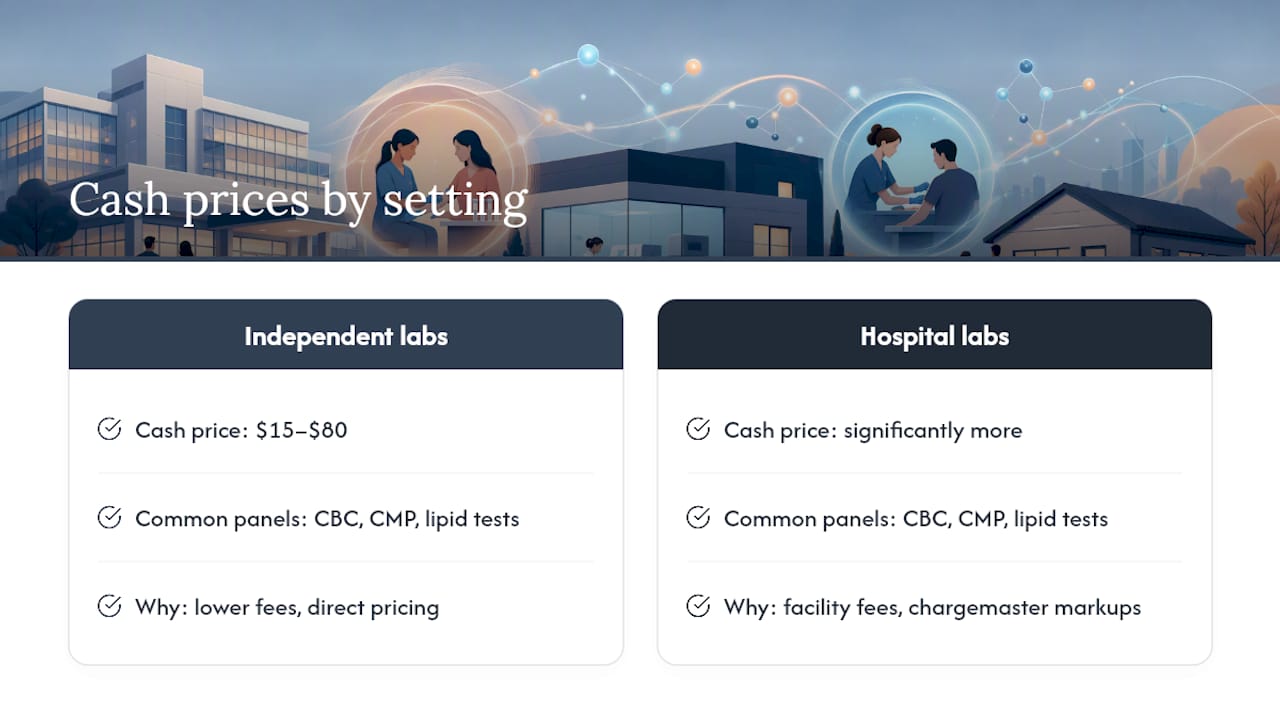
Cash prices at independent labs typically range from $15–$80 for common panels like CBC, CMP, and lipid tests. Hospital labs charge significantly more due to facility fees and chargemaster markups.
Are self-pay lab results as accurate as insurance-covered ones?
Yes, when processed at a CLIA-certified lab. CLIA regulations apply equally to DAT and provider-ordered tests; the main accuracy risks are preanalytical factors like fasting and sample handling, not the lab itself.
Does EIV Diagnostics accept self-pay patients without insurance?
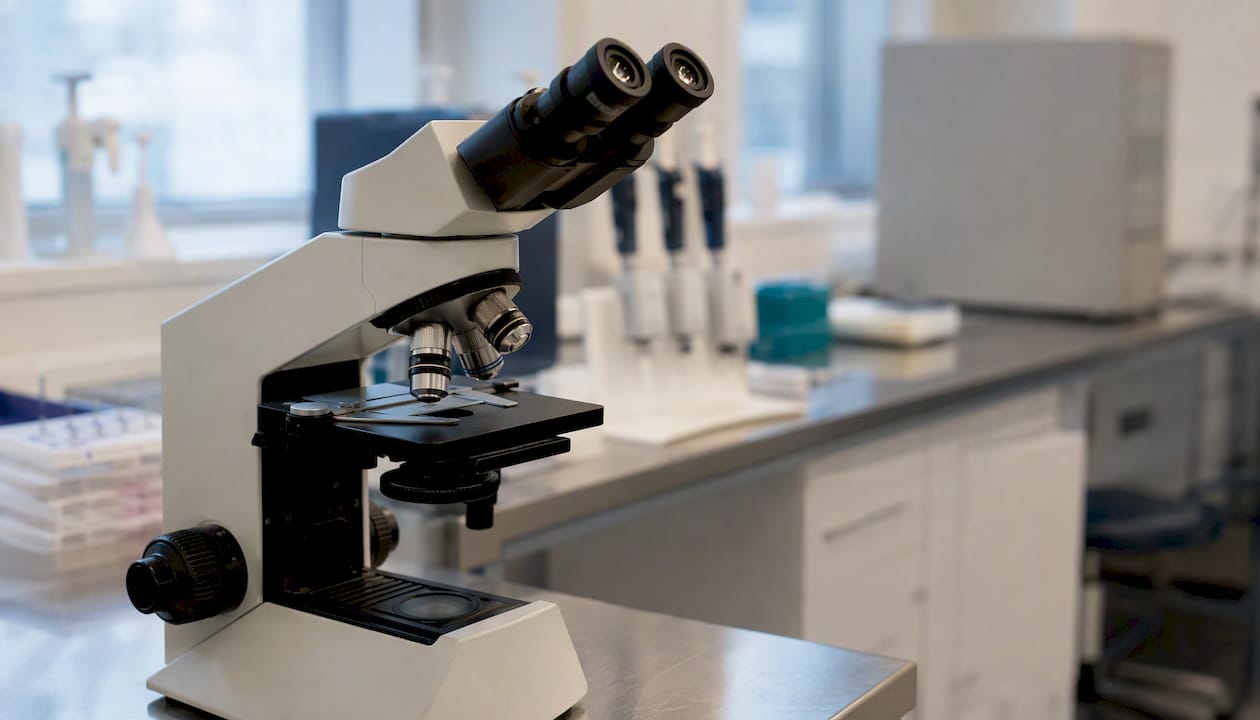
Yes. EIV Diagnostics accepts direct-to-consumer self-pay orders with no insurance required, offers mobile phlebotomy, and provides CLIA-certified results reviewed by board-certified pathologists.
What states restrict direct access lab testing?
Most states permit DAT, but a few (including New York and New Jersey) have historically required physician involvement for certain tests. Check your state’s current rules or ask your lab before ordering a sensitive panel.