
By EIV Diagnostics · September 28, 2026
HPV PCR Testing for Clinicians and Patients: The 14 High Risk Types
A clinical-first explainer of HPV PCR testing: which 14 high-risk types assays detect, how to read results, what to ask your lab, and EIV Diagnostics'...
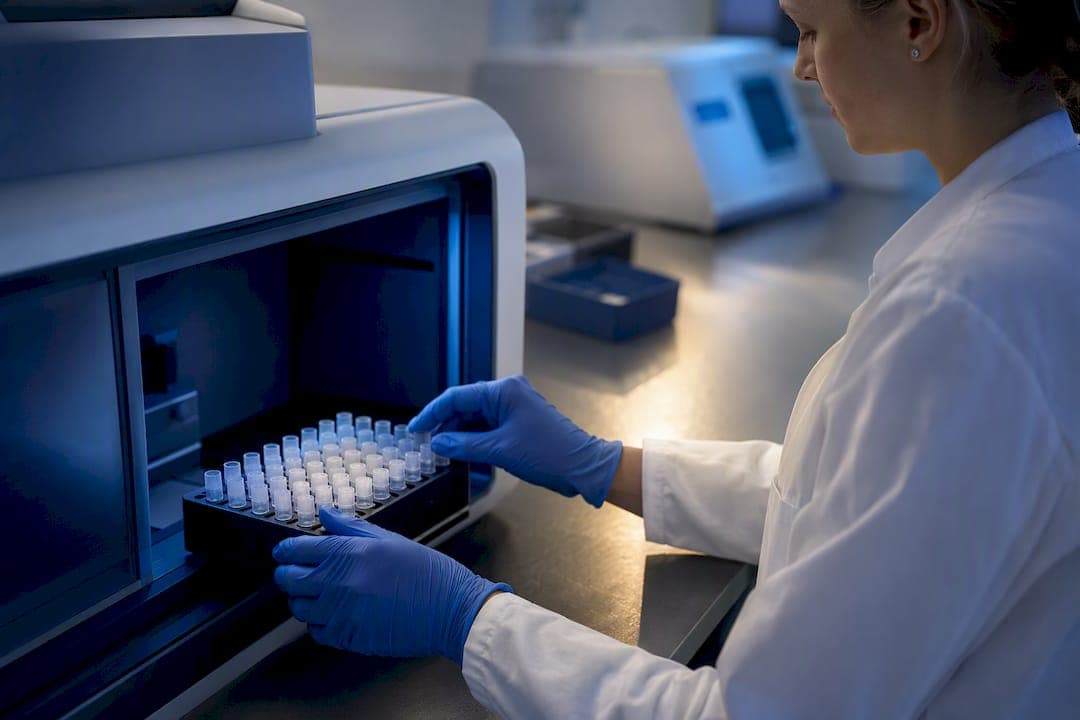
An HPV PCR test detects high-risk HPV DNA and is used to screen for and triage the risk of cervical precancer and cancer. Many assays also identify the specific genotype present, particularly HPV 16 and 18, which carry the highest cancer risk. A positive result almost always means an active infection, not a cancer diagnosis, and follow-up follows established clinical guidelines rather than automatic alarm.
TL;DR:
- Most high-risk HPV infections detected by PCR are transient and typically clear within one to two years without causing cancer.
- PCR assays target 14 carcinogenic HPV types, with HPV 16 and 18 being prioritized for separate reporting due to their higher cancer risk.
- Self-collected vaginal specimens are now FDA-approved in healthcare settings for primary screening, but clinician collection remains preferred for symptomatic or high-risk individuals.
- A positive result for HPV 16 or 18 usually warrants faster referral to colposcopy, while positivity for other high-risk types often leads to repeat testing or cytology assessment.
- Accurate interpretation depends on knowing the specific assay used, the specimen type, and genotyping details, ideally guided by consultation with your healthcare provider.
Table of Contents
- How HPV PCR testing works: methodology, specimen types, and lab process
- Which HPV genotypes PCR assays target and why genotyping matters
- Who should get HPV PCR testing: guideline summary and screening intervals
- Interpreting results: negative, positive, and indeterminate outcomes and next steps
- Accuracy and limitations: sensitivity, specificity, and assay differences
- Self-collected samples and regulatory updates: what changed and practical guidance
- Clinical and oncology considerations: triage, surveillance, and non-cervical testing limits
- EIV Diagnostics: capability statement and how we support HPV PCR testing
- Questions to bring to your clinician or lab about HPV PCR testing
- Getting HPV PCR testing done through EIV Diagnostics
- Sources
- FAQ
How HPV PCR testing works: methodology, specimen types, and lab process
Polymerase chain reaction (PCR) works by copying small fragments of viral DNA millions of times until they become detectable. For HPV testing, this means the lab is not looking for symptoms or antibodies. It is looking for the genetic material of the virus itself. Most clinical assays are qualitative: they report whether high-risk HPV DNA is present, and in many cases, which of the 14 targeted oncogenic types was found.
The BD Onclarity HPV Assay is one of several FDA-cleared tests built around this approach, designed to detect high-risk HPV types in specimens collected for routine cervical cancer screening.
Specimen collection has traditionally been clinician-performed. A provider collects cervical cells during a pelvic exam, usually placed into a liquid preservative such as ThinPrep or SurePath, the same medium often used for Pap cytology. This dual-purpose collection allows one visit to generate both an HPV result and a cytology result when cotesting is ordered. Self-collected vaginal specimens have become an accepted alternative in specific settings, a shift covered in more detail later in this article.
A few practical points affect sample quality and result accuracy:
- Avoid vaginal creams, lubricants, or douching for about 48 hours before collection, since residue can interfere with cell yield.
- Testing during heavy menstrual bleeding is generally discouraged because blood can dilute the specimen.
- Timing matters less for HPV DNA detection than for cytology, since the virus is present regardless of cycle phase.
- Specimens must be kept within the stability window specified by the assay manufacturer, generally under refrigeration during transport to the lab.
Turnaround time varies by lab and assay but commonly falls within a few business days for routine screening. Reports typically state a binary result (positive or negative for high-risk HPV) and, for assays with genotyping capability, will separately flag HPV 16 and HPV 18 when detected, since these carry distinct management implications discussed in the next section.
Which HPV genotypes PCR assays target and why genotyping matters
Not all HPV types carry the same cancer risk, and screening assays are built around a specific list. FDA-cleared PCR tests, including the BD Onclarity assay, target 14 high-risk oncogenic types recognized internationally as carcinogenic:
- HPV 16, 18, 31, 33, 35, 39, 45, 51, 52, 56, 58, 59, 66, and 68.
These 14 types are the internationally recognized carcinogenic HPV strains targeted in routine cervical screening, according to the FDA’s clearance documentation for the BD Onclarity assay. That single list underpins nearly every primary HPV screening program in use today.
Among these 14, HPV 16 and 18 stand apart. They are responsible for the largest share of cervical precancers and cancers, which is why most FDA-cleared assays report them individually rather than lumping them into a generic “high-risk positive” result. A positive result for HPV 16 or 18 typically changes the management pathway, often prompting a faster move to colposcopy rather than a repeat test in a year.

Extended genotyping goes a step further, identifying additional individual types beyond 16 and 18 from within the panel of 14. This can help a clinician decide how urgently to act when a patient tests positive for a type outside the two highest-risk categories, particularly if there is a prior history of abnormal cytology or persistent infection with the same type across multiple screening rounds. It is not required for every patient, but it adds useful resolution to results interpretation.
Who should get HPV PCR testing: guideline summary and screening intervals

Screening recommendations have shifted over the past decade toward primary HPV testing as the preferred strategy for many average-risk adults. The American Cancer Society’s cervical cancer screening guidelines recommend primary high-risk HPV testing every 5 years as the preferred approach for average-risk individuals aged 25 to 65.
Two acceptable alternatives exist for people who prefer them or whose provider follows a different protocol:
- HPV and Pap cotesting every 5 years, combining both tests from a single collection.
- Cytology (Pap test) alone every 3 years, without HPV testing.
The CDC’s guidance on HPV and cervical cancer screening echoes this framework, noting that USPSTF and CDC recommendations describe age-based approaches and specify the role of HPV testing, cotesting, and cytology depending on the person’s age and risk profile. These bodies also emphasize that any test used should be FDA-cleared for the specific indication it is being used for, whether that is primary screening, cotesting, or triage of an abnormal result.
Several groups fall outside these standard intervals and need individualized surveillance instead:
- People who are immunocompromised, including those living with HIV, typically need more frequent screening.
- Anyone with a history of high-grade cervical dysplasia requires extended surveillance beyond the standard interval, even after treatment.
- Those previously treated for cervical cancer follow a distinct post-treatment monitoring schedule set by their oncology team.
- People with in-utero DES exposure or other specific histories may need modified protocols determined individually.
One point worth stating plainly: screening recommendations remain the same regardless of HPV vaccination status. Vaccination reduces the risk of infection with the types it covers, but it does not eliminate the need for scheduled screening, since vaccinated individuals can still be exposed to types not covered by their vaccine or may have been exposed before vaccination.
Interpreting results: negative, positive, and indeterminate outcomes and next steps
Understanding what a result actually means matters more than the result itself. According to the Mayo Clinic’s overview of HPV testing, a positive HPV PCR test indicates the presence of a high-risk type but does not mean the patient has cancer. Management is risk-based, ranging from simple repeat testing to colposcopy and biopsy depending on genotype, age, and history.
- Negative result. This reflects low immediate risk for precancer, and the person typically returns to the standard screening interval of every 5 years for primary HPV testing, per ACS guidance.
- Positive for HPV 16 or 18. This combination generally prompts a faster workup, often direct referral to colposcopy rather than a repeat test, since these two types carry the highest documented cancer risk among the 14 targeted strains.
- Positive for another high-risk type. The provider frequently orders reflex cytology on the same sample if it was not already performed, then decides on colposcopy versus repeat testing in one year based on the cytology result and the patient’s prior screening history.
- Indeterminate or invalid result. This usually stems from insufficient cellularity in the sample or the presence of substances that interfere with the PCR reaction. The lab or clinician will typically request a new sample rather than guess at a result.
The Mayo Clinic also notes that most HPV infections are transient, clearing on their own within one to two years, which is why clinical consensus favors interpreting positive PCR results within a risk-based framework rather than treating every positive as an emergency. A provider weighs the specific genotype, the patient’s age, any prior abnormal cytology, and how long an infection with the same type has persisted before deciding on next steps. For a deeper look at what specific cytology findings mean and how they connect to HPV results, see what abnormal cervical cytology results typically indicate.
Accuracy and limitations: sensitivity, specificity, and assay differences
PCR-based HPV tests have high analytic sensitivity, meaning they are very good at detecting viral DNA when it is present in a sample. Clinical specificity is a separate question, and it varies more than sensitivity does, largely because many HPV infections are transient rather than persistent. A person can test positive today and clear the infection naturally within a year or two, which is a normal immune response rather than a testing error.
Several factors influence how reliable an individual result is:
- Sampling technique: an inadequate cell sample from the collection can produce a false negative or an indeterminate result.
- Specimen type: clinician-collected cervical samples and self-collected vaginal samples are not interchangeable across all assays and indications.
- Assay design: different platforms detect overlapping but not always identical genotype panels, and design affects sensitivity for specific types.
- Intended use: a test cleared for primary screening is not automatically appropriate for triage or surveillance after treatment, and vice versa.
Not every HPV test on the market is FDA-cleared for every clinical purpose. Using the right assay for the right indication is a core part of accurate reporting, a point the CDC’s treatment guidelines reinforce by stressing that laboratories and clinicians should confirm an assay’s cleared indications before applying it to a given clinical question. For readers who want a broader technical grounding in how PCR performance is evaluated across different applications, see how accurate PCR testing actually is.
When a result does not fit the clinical picture, or when a clinician needs more information before deciding on colposcopy, additional tests come into play. Reflex cytology, p16 immunohistochemistry, and RNA in situ hybridization each answer a slightly different question, and a specialist referral is appropriate whenever genotype, cytology, and clinical history point in different directions.
Pro Tip: Ask your lab which specific assay was used and what it is FDA-cleared to detect. The genotype panel and intended use can differ between tests, and that detail shapes how your result should be interpreted.
Self-collected samples and regulatory updates: what changed and practical guidance
Self-collection used to be limited mostly to research settings, but that has changed. According to NCI’s Cancer Currents coverage of the 2024 FDA decision, the FDA approved certain HPV assays for testing self-collected vaginal specimens obtained in a healthcare setting, making self-collection an acceptable alternative for primary screening in asymptomatic, average-risk individuals.
This does not mean mailing a swab from home without any clinical oversight. The approval covers self-collection performed within a healthcare setting, such as a clinic bathroom or exam room, using a device compatible with the specific assay being run. The same NCI coverage notes that guidance suggests a conservative 3-year rescreening interval for self-collected specimens, while longer-term outcome data continue to accumulate, compared to the 5-year interval used for clinician-collected primary HPV testing.
Several situations still call for clinician collection rather than self-collection:
- Anyone with current abnormal bleeding or symptoms suggestive of a gynecologic problem.
- People who are immunocompromised, who generally need more intensive surveillance than a self-collected sample supports.
- Anyone following up on a previous abnormal HPV or cytology result, since self-collection is intended for average-risk screening rather than surveillance.
- Situations where the ordering provider specifically wants a paired cytology sample from the same collection.
For those who are eligible and choose self-collection, a few practical habits improve sample quality: avoid vaginal creams or lubricants in the prior 48 hours, avoid testing during heavy menstrual flow, and follow the device instructions exactly, since insertion depth and swab handling affect how much cellular material the sample contains.
Clinical and oncology considerations: triage, surveillance, and non-cervical testing limits
Beyond routine screening, HPV PCR testing plays a specific role in triage and surveillance that follows its own set of decision points, generally organized around ASCCP-aligned management pathways.
- After an abnormal cytology result, HPV genotype status helps decide whether a patient goes straight to colposcopy or repeats testing in a shorter interval.
- Following treatment for high-grade cervical dysplasia, periodic HPV testing helps monitor for recurrence over a longer surveillance window than standard screening uses.
- A persistently positive result for the same genotype across multiple screening rounds carries more clinical weight than a single positive test, since persistence is a better predictor of progression than a one-time detection.
Outside of cervical screening, HPV testing has a narrower and more specialized role. In oropharyngeal (head and neck) cancers, HPV status matters for prognosis and treatment planning, but the testing approach differs substantially from cervical screening. CAP’s practice guideline on HPV testing in head and neck carcinomas recommends p16 immunohistochemistry as a primary surrogate marker in these tumors, with HPV-specific confirmatory testing by RNA in situ hybridization or PCR used depending on the tissue type and the clinical question at hand. A positive p16 result on a head and neck tumor is not the same test, and does not carry the same meaning, as a positive cervical HPV PCR screen.
Testing for low-risk HPV types, or applying cervical screening assays to non-cervical specimens, is not part of standard practice and does not have the same evidence base behind it. When a case involves overlapping findings, such as an oropharyngeal tumor with ambiguous p16 status or a cervical result that does not match the clinical picture, a multidisciplinary discussion involving pathology and oncology is the appropriate next step rather than ordering additional tests piecemeal.
EIV Diagnostics: capability statement and how we support HPV PCR testing
An independent pathology laboratory offers molecular pathology, dermatopathology, and digital pathology services, built around PCR-based testing like that described in this article. The lab works with healthcare providers who order testing for their patients, with patients who arrive with a prescription, and with individuals who want to self-pay for testing directly.
For readers weighing HPV PCR testing, a few parts of how EIV Diagnostics operates are directly relevant. Molecular pathology testing is performed and reviewed by board-certified pathologists, supporting the kind of accurate genotype-level reporting that shapes follow-up decisions. Reporting turnaround aims to be fast, since a delayed result can affect timely decisions about colposcopy or repeat testing.
For anyone who finds it difficult to get to a clinic for specimen collection, mobile phlebotomy brings sample collection to a home or office instead. This matters for people managing work schedules, mobility limitations, or simply a preference to avoid a waiting room. Some pathology laboratories operate under CAP-accredited quality standards, with board-certified pathologists providing subspecialty expertise to interpretation, which is particularly relevant for HPV PCR tests where the detected genotype influences management.
Questions to bring to your clinician or lab about HPV PCR testing
If you are heading into a screening appointment or reviewing a result, a short list of questions gets you more useful answers than a general conversation about HPV.
- Ask which specific assay was used and what it is FDA-cleared to detect, since genotype panels differ between tests.
- Ask whether the assay reports HPV 16 and 18 individually, since that detail changes how urgently a positive result is typically managed.
- Confirm which specimen type was collected and whether that matches the assay’s intended use, particularly if self-collection was involved.
- Ask about expected turnaround time so you know when to expect results and what the follow-up plan will be if the result is positive.
- If a result is positive, ask directly what the recommended next step is and why, rather than assuming the worst.
If you have a history of abnormal cytology, are immunocompromised, or have current symptoms, request clinician-collected sampling rather than self-collection, and ask about expedited referral if your circumstances warrant it. Most HPV infections clear on their own, and follow-up is based on your individual risk profile, not a single number on a lab report.
— EIV Diagnostics
Getting HPV PCR testing done through EIV Diagnostics
Whether your provider has ordered HPV PCR testing or you want to arrange it yourself, EIV Diagnostics offers a practical path to both. 
Our molecular pathology service runs the PCR-based testing described throughout this article, interpreted by board-certified pathologists who report genotype detail clearly enough for your clinician to act on. If getting to a clinic for specimen collection is the obstacle, our mobile phlebotomy service sends a phlebotomist to your home or office instead. And if you would rather order testing directly without waiting on a referral, our self-pay testing option lets you arrange HPV PCR testing on your own terms, with or without insurance. Reach out through our site to schedule a mobile draw or ask about self-pay options for HPV PCR testing.
This article is general information, not a substitute for advice from a qualified doctor. Consult a qualified healthcare professional about your own circumstances before acting on anything here.
Sources
- BD Onclarity HPV Assay - FDA
- American Cancer Society cervical cancer screening guidelines
- NCI/Cancer Currents: FDA approves HPV self-collection option (2024)
- Mayo Clinic — HPV test overview
- CDC STI treatment guidelines — HPV and cervical cancer screening
FAQ
What does a positive HPV PCR test mean?
A positive result means high-risk HPV DNA was detected in your sample, which indicates an active infection rather than cancer. According to the Mayo Clinic, follow-up depends on which genotype was detected, your age, and your prior screening history, and can range from a repeat test to colposcopy.
Should I worry if I test positive for HPV?
A positive result is common and usually reflects a transient infection that clears on its own within a year or two. Clinical guidance frames follow-up as risk-based rather than urgent in most cases, with faster workup reserved mainly for HPV 16 or 18 or a persistent infection with the same type across multiple screenings, per the Mayo Clinic’s guidance.
Is HPV still considered a sexually transmitted infection?
Yes, HPV spreads through intimate skin-to-skin contact and is classified as a sexually transmitted infection by public health authorities. The CDC’s guidance addresses HPV within its sexually transmitted infection treatment framework, alongside its role in cervical cancer screening.
Am I contagious if I tested positive for HPV?
A positive test means the virus is currently detectable in your body, which generally corresponds to a period when transmission to a partner is possible. Because most infections clear naturally over time, contagiousness is not permanent, though there is no PCR-based test that tells you the exact point at which an infection has fully resolved.