
By EIV Diagnostics · November 11, 2026
GI Pathogen PCR: What the Stool Panel Detects and How to Read It
A plain-English guide to GI pathogen PCR: what a gastrointestinal panel detects, how to collect the stool sample, how it compares with culture, and how to read results.
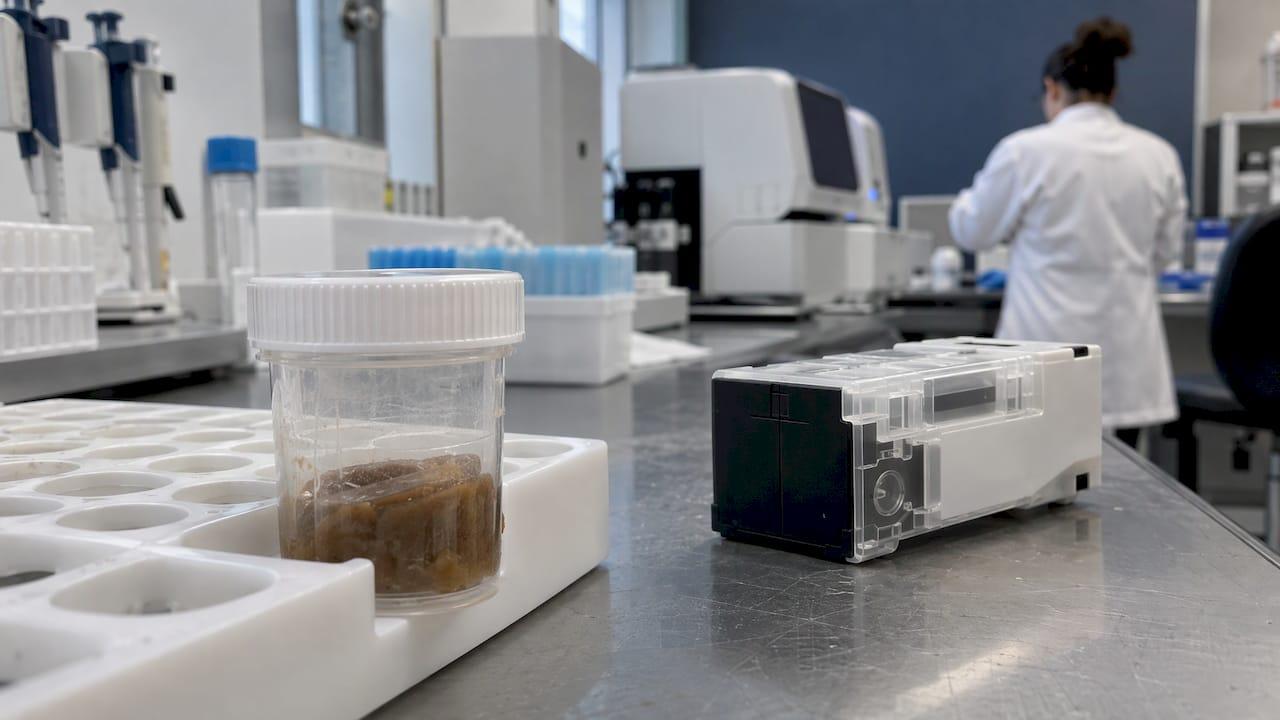
A GI pathogen PCR test, also called a gastrointestinal PCR panel, checks one stool sample for the genetic material of many bacteria, viruses and parasites at once. It can return results in hours instead of days. It tells you which organisms’ DNA or RNA is present. It does not, on its own, tell you which one is making you sick. This guide explains what the panel finds, when clinicians order it, how the sample is handled, and how to interpret a positive or negative report.
TL;DR
- A GI pathogen PCR panel is a multiplex test: one stool sample is screened for roughly 11 to 25 common causes of infectious diarrhea, depending on the panel.
- Multiplex panels are highly sensitive and fast, but they detect genetic material, which can come from organisms that are no longer alive or from harmless carriage.
- Stool culture is slower but is the only stool method that gives antibiotic susceptibility data.
- Collection matters: the right transport medium and prompt delivery protect the result.
- Results always need a clinician’s interpretation alongside your symptoms, history and travel.
Table of Contents
- What a gastrointestinal PCR test is
- What the panel can detect
- When clinicians order a GI pathogen panel
- How the stool sample is collected and processed
- How accurate is GI pathogen PCR?
- Stool culture vs. stool PCR
- How to read your results
- Why panels are not ordered for everyone
- Perspective: why molecular detail matters
- Skin infection lab tests: how PCR fits in
- Related PCR guides
- Getting molecular testing in the Central Valley
- FAQ
- Sources
What a gastrointestinal PCR test is
PCR (polymerase chain reaction) copies tiny amounts of a target’s genetic code until it is easy to detect. A multiplex panel runs many of those targets in one cartridge or run. According to a 2025 review of multiplex PCR panels, the first stool panel became available in the United States in 2015, and these panels are now the cornerstone of laboratory diagnostics for infectious diarrhea.
Before panels, a clinician had to guess which test to send: a culture for the usual bacteria, a separate test for C. difficile, an antigen test for a parasite, a microscope exam for ova and parasites. Each one looks for a narrow set of causes. A panel replaces that guesswork with one broad look, which matters because many gut infections cause nearly identical symptoms: watery stool, cramping, nausea, fever.
The number of FDA-cleared options keeps growing. A 2023 transplant infectious disease review counted eight FDA-cleared GI panels in the United States, and in 2026 the FDA cleared another PCR test that detects 11 gastrointestinal pathogens (eight bacteria, two parasites and one virus) from a single stool sample in just over an hour. Panels differ in size, so the list of targets on your report is the list that panel covers, no more.

What the panel can detect
Panel menus vary, but most large ones cover three groups:
- Bacteria: common causes of bacterial diarrhea, plus toxin-producing strains of some organisms.
- Viruses: typically norovirus, rotavirus, adenovirus and similar agents.
- Parasites: usually a short list such as Giardia, Cryptosporidium and Cyclospora.
Public health laboratories describe the larger format. The San Francisco Public Health Laboratory notes that its GI panel PCR detects nucleic acids from 22 bacteria, viruses and parasites in stool.
Stool parasite PCR: what it adds and where microscopy still leads
If you searched for stool parasite PCR, the short version is that PCR is one good tool among several, and the best choice depends on the organism.
For Giardia, the CDC says microscopy with direct fluorescent antibody testing is the gold standard. The same page lists molecular assays among other available tests, alongside rapid cartridge assays, enzyme immunoassay kits and trichrome-stained microscopy. It adds that molecular testing is the only way to tell different Giardia strains apart. The CDC also recommends collecting three stool samples over several days for accurate Giardia testing.
More broadly, the CDC’s parasitology reference says microscopic examination is still the gold standard for parasitic disease, and that PCR is used when a clear identification cannot be made by microscopy, with further sequencing if the organism needs more characterization.
The AAFP’s 2023 review of intestinal parasites gives a practical order of operations for diarrhea lasting seven days or longer: start with molecular or antigen testing, then move to comprehensive stool ova and parasite testing if that is negative. It also notes that people with healthy immune systems often clear intestinal parasites on their own. So whether you need a parasite-focused test depends on how long symptoms have lasted, your immune status and where you have lived or traveled. That is a conversation for your clinician.
When clinicians order a GI pathogen panel
Most short bouts of diarrhea resolve without any testing. Testing is aimed at people for whom the answer changes care. A 2025 Cleveland Clinic Journal of Medicine article lists conditions that warrant a GI pathogen panel:
- Fever
- Visible blood in the stool
- Sepsis
- Severe abdominal pain
- Hospitalization
- Persistent diarrhea (seven days or more)
- Advanced age
- Immunocompromise
The same article points out that if testing is negative in someone with persistent diarrhea, inflammatory bowel disease should be considered. A negative panel is useful information, not a dead end.
If you have blood in your stool, a high fever, severe pain, signs of dehydration such as dizziness or very little urine, or a weakened immune system, contact your doctor or urgent care promptly rather than waiting on a test order.
How the stool sample is collected and processed
The quality of the sample shapes the quality of the result. Your ordering clinic or laboratory will give you the exact kit, and you should follow its instructions over any general guide. The published collection rules show why the details matter:
- The San Joaquin Public Health Laboratory’s specimen collection guide says its GI PCR panel needs at least 2.5 ml per vial, added to Cary-Blair transport medium immediately after collection. It can travel at room temperature for up to 4 hours or refrigerated for up to 4 days.
- San Francisco’s public health lab asks for Cary-Blair media, refrigeration at 2 to 8 °C, and receipt within three days of collection.
- The CDC describes using a molecular-compatible preservative for PCR on stool, which allows room-temperature storage and shipping. Unpreserved stool in a clean vial has to be kept cold or frozen.
These are requirements of specific laboratories and differ from one lab to the next. That is why you should never improvise: use the vial and medium the lab provides, label it with your name and collection time, and deliver it as directed. Do not take the sample from the toilet water, and avoid contaminating it with urine or toilet paper.
One more detail for parasite work: the CDC notes that when PCR is requested for certain protozoa, stained smears should accompany the specimen, and those smears are read first. If the organism can be identified, PCR is not performed.
How accurate is GI pathogen PCR?
For the organisms on the menu, very accurate. A 2025 review reports analytic sensitivity of 94.5% to 100% and analytic specificity of at least 96.5%, and says panels detect three to five times more pathogens than other methods in community-acquired gastroenteritis.
Speed is part of the appeal. In a 2025 study of 257 children, multiplex PCR had a sensitivity of 96.2% against 77.9% for stool culture, with a median turnaround of 7.9 hours versus 47.5 hours.

But accuracy has a precise meaning here. Sensitivity and specificity vary by organism, as a review in the Journal of Gastroenterology and Hepatology stresses, and a positive result has to be read in clinical context. Quoting one number for a whole panel hides that.
Stool culture vs. stool PCR
These two tests answer different questions. A 2026 review in Gastroenterology & Hepatology lays out the contrast, summarized here:
| Stool culture | Multiplex stool PCR | |
|---|---|---|
| Turnaround | 48 to 96 hours for incubation and growth | 1 to 2 hours of run time |
| Sensitivity | Moderate | Above 95% |
| Specificity | Not given in the source | Above 97% |
| What it detects | Viable organisms | Nucleic acid, which may come from dead organisms |
| Antibiotic susceptibility | Yes, the only stool method that provides it | No |
| Outbreak tracking | Optimal | Limited |
In practice, a panel is often the first step because it is broad and fast. A culture may be added when a clinician needs to know which antibiotics will work, or when public health investigators need an isolate. Neither replaces the other in every situation.
How to read your results
A positive result
A positive means the panel found genetic material from that organism. It does not always mean that organism caused your symptoms. The 2023 transplant review explains that panels detect nucleic acid from viable and non-viable organisms and cannot separate active from subclinical infection, intermittent from chronic shedding (norovirus and adenovirus are examples), or asymptomatic carriage such as C. difficile. For C. difficile, it warns that unrestricted panel use can contribute to overdiagnosis.
A 2018 review in PMC makes a related point: these tests cannot distinguish true infection from a carrier state and do not provide drug susceptibility. Public health lab reports carry the same caveat, that detecting a target does not imply it is the cause of symptoms.
Multiple positives
Co-detections are common on large panels, and the 2026 Gastroenterology & Hepatology review notes they can have unclear clinical significance. Your clinician weighs which finding fits your symptoms, how long you have been ill and your risk factors.
A negative result
A negative means none of the panel’s targets was detected. It does not rule out causes the panel does not cover, which is why a persistent illness may lead to a different test, a parasite-specific workup or an evaluation for non-infectious causes.
Why panels are not ordered for everyone
Broad panels cost more than single tests. The 2025 review notes the costs can be offset by better diagnostic accuracy and more targeted therapy, but reimbursement barriers may discourage providers from ordering comprehensive panels or push them toward smaller ones. If you are paying out of pocket or your insurer has questions, ask before collecting the sample what the panel includes, what it costs and whether a smaller panel would answer your clinician’s question.
Perspective: why molecular detail matters
At EIV Diagnostics, we see GI PCR as a good example of what molecular pathology does best: it turns a vague set of symptoms into a specific, readable report. Our lab is built around molecular pathology, clinical pathology and board-certified pathologists, and our approach is designed to give clinicians fast, precise reporting they can act on.
The strongest results come from good questions at the start. Which organisms are plausible given the symptoms and travel history? Is the sample preserved correctly? Does the clinician need susceptibility data, or only a fast answer? When those questions are settled before the sample is collected, the report is easier to interpret and the next step is clearer.
We also believe patients should understand their reports. A list of detected and not-detected targets is the start of a conversation with your clinician, and we are glad to be part of making that conversation faster and better informed.
EIV Diagnostics
Skin infection lab tests: how PCR fits in
People searching for GI panels often are also looking at other infection testing, so here is how the picture differs for skin and soft tissue. Most skin infections are diagnosed from the look and history, and lab testing is saved for severe, unusual or non-responding cases. The IDSA’s guidelines on skin and soft-tissue infections describe pursuing a definitive diagnosis aggressively in sicker patients, with methods such as Gram stain and culture of aspirates or punch biopsy samples. For specific organisms such as Bartonella, they note PCR is a diagnostic option alongside serology, though mainly a research tool in that guideline’s time frame.
If your concern is a wound that is not healing, our guide to wound infection PCR covers what that kind of test detects and what it misses. If a skin lesion needs tissue evaluation, dermatopathology is the discipline that examines it under the microscope.
Related PCR guides
GI panels are one member of a family of molecular tests that share the same logic: broad detection, speed, and the need for clinical interpretation. If your symptoms are not purely digestive, these may help:
- Persistent stomach symptoms: H. pylori PCR testing
- Cough, fever or sore throat: the respiratory PCR panel and strep throat PCR
- Urinary symptoms: PCR for UTI
Getting molecular testing in the Central Valley
EIV Diagnostics is an independent pathology laboratory in Fresno, serving patients and providers across Fresno, Clovis, Madera, Tulare and Kings counties and nearby communities. We work with providers, with patients who have a prescription, and with direct-to-consumer customers who want to self-pay.
If you are a clinician, our molecular pathology service supports PCR-based diagnostics, and our clinical pathology team handles routine lab work. Contact us to confirm which tests and panels we currently offer for your patient.
If you are a patient who wants to order without a doctor’s visit, our self-pay testing page explains how it works.
For blood work that goes with your evaluation, our mobile phlebotomy service brings the draw to your home or office, starting at $65 per visit. Stool samples are collected by you with the kit and instructions you are given, so ask about the right process when you order.
FAQ
What is a gastrointestinal PCR test?
It is a stool test that uses PCR to look for the genetic material of many bacteria, viruses and parasites at once. A single sample can screen for the most common causes of infectious diarrhea. Results are often available much faster than culture.
What diseases can GI pathogen PCR detect?
It detects the infections on its panel’s menu, typically common bacterial, viral and parasitic causes of gastroenteritis. The exact list depends on the panel, from about 11 targets on smaller panels to more than 20 on larger ones. Anything not on the menu will not appear on the report.
Is stool PCR better than stool culture?
They do different jobs. PCR is faster and more sensitive for the organisms it targets, while culture detects living organisms and is the stool method that provides antibiotic susceptibility. Your clinician chooses based on your symptoms and what the result needs to decide.
Does a positive result mean that germ made me sick?
Not always. PCR can detect genetic material from dead organisms or from carriage without symptoms, so your clinician interprets the result alongside your symptoms and history. Co-detections of more than one organism are common on large panels.
How should I store the stool sample?
Follow the kit’s instructions exactly, because requirements vary by laboratory. Many labs use a transport medium such as Cary-Blair and ask for refrigeration and delivery within a few days. Label the vial and deliver it promptly.
Sources
- Multiplex Polymerase Chain Reaction Panels for gastrointestinal infections (PMC, 2025)
- FDA clears PCR test that detects 11 gastrointestinal pathogens (Healio)
- How I approach diarrhea in hematological transplant patients (Transplant Infectious Disease, 2023)
- Gastrointestinal Panel PCR (SF.gov)
- Clinical Testing and Diagnosis for Giardia Infection (CDC)
- CDC DPDx: Diagnostic Procedures, Stool Specimens
- Common Intestinal Parasites (AAFP, 2023)
- Which patients with presumed acute infectious diarrhea need testing (Cleveland Clinic Journal of Medicine, 2025)
- San Joaquin Public Health Laboratory Specimen Collection Guide (2025)
- A Game Changer for Acute Gastroenteritis in the Pediatric Population (PMC, 2025)
- Review of the role of gastrointestinal multiplex PCR (Journal of Gastroenterology and Hepatology, 2021)
- Use and Interpretation of Enteropathogen Multiplex Nucleic Acid Tests (PMC, 2018)
- Stool-Based Diagnostic Testing for Bacterial and Parasitic Infections (Gastroenterology & Hepatology, 2026)