
By EIV Diagnostics · October 6, 2026
Up to 97% Sensitive but Not Resistance: BV PCR for Clinicians, Patients
BV PCR: when it helps and why it won’t show antibiotic resistance. Practical test interpretation, plus EIV mobile collection and lab reporting.
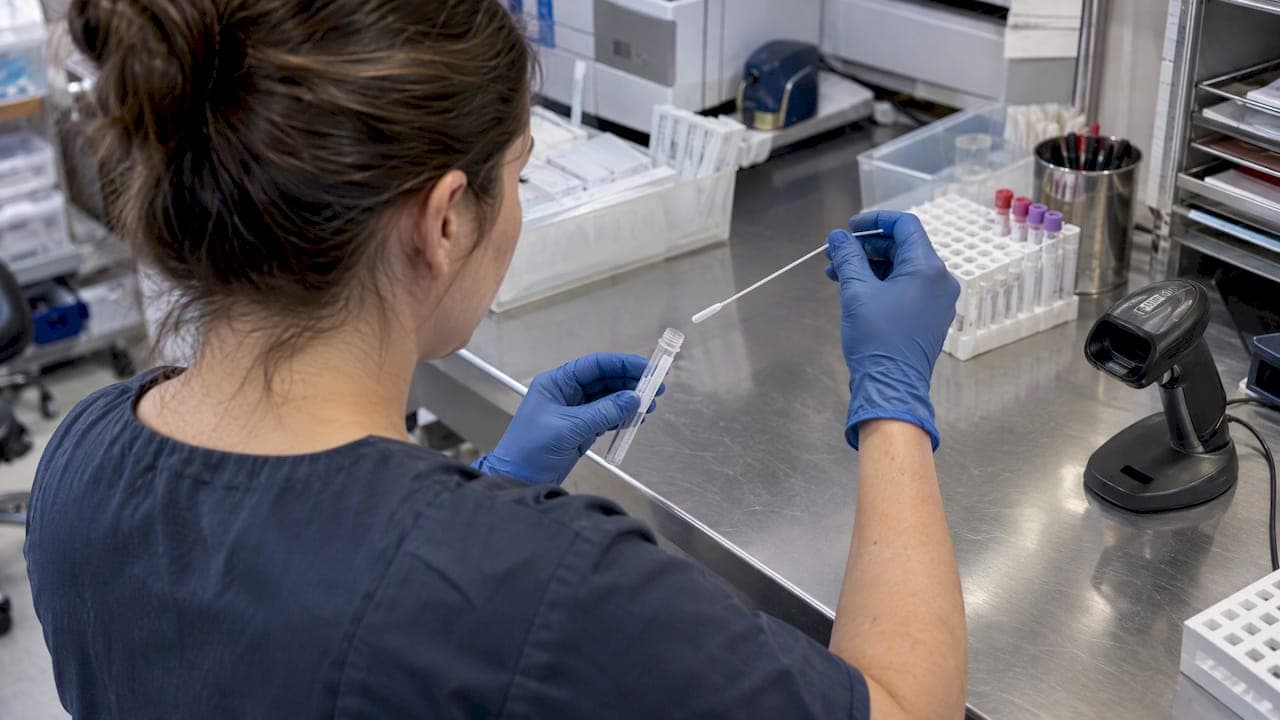
A bacterial vaginosis PCR is a multiplex molecular test that detects a pattern of BV-associated bacteria alongside Lactobacillus markers, and it works best for symptomatic or unclear cases where microscopy leaves a question mark. It identifies which organisms are present, not whether those organisms will respond to a particular antibiotic. That distinction shapes almost everything about how results should be used.
TL;DR:
- BV PCR tests accurately detect Gardnerella, Atopobium, and Megasphaera, but cannot determine if these bacteria respond to specific antibiotics.
- They are most valuable for recurrent, complicated, or atypical BV cases, or when co-testing for other infections is necessary.
- Proper sample collection, timely transport, and knowledge of antibiotic use are essential for reliable PCR results.
- A positive BV PCR supports diagnosis in symptomatic patients, but results should always be interpreted within the clinical context.
- Resistance-based PCR for antibiotic susceptibility remains experimental and is not yet part of routine BV diagnosis.
Table of Contents
- What BV PCR tests detect and how multiplex assays work
- Who should get a BV PCR test versus microscopy
- Specimen collection, transport, and lab workflow
- Interpreting BV PCR results and their limits
- How our molecular testing and mobile services support accurate BV diagnosis
- Clinical perspective: when molecular testing will and won’t change management
- Ordering BV PCR testing through EIV Diagnostics
- FAQ
- Sources
What BV PCR tests detect and how multiplex assays work
A BV PCR panel looks for a combination of organisms rather than a single pathogen; for those interested in the underlying assay chemistry, a practical guide to multiplex assay design offers detailed insight. Because bacterial vaginosis reflects a shift in the whole vaginal microbial community, CDC guidance notes that these assays typically combine BV-associated organism targets with selected Lactobacillus species, since a healthy Lactobacillus-dominant pattern argues against BV even when other organisms are detected.
Commonly targeted organisms include:
- Gardnerella vaginalis, the organism most consistently associated with BV.
- Atopobium vaginae (also classified as Fannyhessea vaginae), a frequent co-occurring species.
- BVAB2, one of several bacterial vaginosis-associated bacteria identified through molecular sequencing.
- Megasphaera species, often elevated in BV-associated communities.
- Lactobacillus species, included to assess whether a protective, low-pH environment is intact.
Platforms vary in method. Some use quantitative PCR, others use transcription-mediated amplification (the technology behind Aptima BV), and some run on automated systems that process multiple targets at once. Most report a qualitative BV call, positive or negative, built from an internal algorithm that weighs the relative burden of BV-associated organisms against Lactobacillus levels, rather than listing every detected species individually.
Performance varies by assay. Clinical validation data shows Aptima BV sensitivity between 95.0% and 97.3%, with specificity between 85.8% and 89.6% compared with clinical reference standards. Because no test is perfect, the value of a result depends heavily on how likely the patient was to have BV before testing.
Who should get a BV PCR test versus microscopy
Molecular testing is not the right first step for everyone with vaginal symptoms. CDC treatment guidance frames NAATs as most appropriate for symptomatic patients, particularly when in-clinic microscopy (Amsel criteria or Nugent scoring) is unavailable or gives an indeterminate read, rather than as a routine asymptomatic screening tool.
Situations where PCR adds the most value:
- Recurrent BV, where repeated episodes make a precise microbial picture more useful for planning treatment.
- Complicated or atypical presentations, where symptoms do not clearly match classic Amsel criteria.
- Co-testing needs, since many panels simultaneously check for Candida and Trichomonas vaginalis, narrowing the differential in one swab.
- Patient-collected swabs, which several validated platforms accept with results comparable to clinician-collected samples.
When symptoms are classic and microscopy is available on the spot, ACOG’s clinical guidance points out that immediate in-clinic diagnosis and treatment can be more efficient than waiting on a PCR result that delays therapy. Evidence is also thinner for some populations, including transgender patients and asymptomatic screening generally, so test selection should account for those gaps rather than assume PCR is always the superior option.
Specimen collection, transport, and lab workflow
Reliable PCR results start with proper collection. Vaginal swabs are typically taken from the posterior fornix, and lubricants should be avoided since they can interfere with amplification. Validated kits generally allow either clinician-collected or self-collected swabs, which works well for patients who prefer a mobile or at-home collection visit.
Preanalytic details matter more than many patients expect:
- Transport kits and stability windows differ by assay, and some collection systems remain stable at room temperature for roughly 72 hours, so timely shipment to the lab still matters.
- Recent antibiotic use or douching can suppress or distort bacterial targets, producing a falsely reassuring negative.
- Using the wrong swab type or a delayed transport are among the most common sources of unreliable results reported in the review of BV diagnostic assays.
- Turnaround time varies by platform, with some assays returning results in about an hour and others taking 24 hours or more depending on lab workflow.
Labs typically report back a qualitative BV result, and for some laboratory-developed tests, a breakdown of which target organisms were detected, along with the collection and reporting timestamps.
Pro Tip: Mention any antibiotic use or douching from the past two weeks when you book your test, since it can change how your result should be interpreted.

Interpreting BV PCR results and their limits
A positive result in a symptomatic patient generally supports a BV diagnosis, especially when it aligns with reported symptoms. A negative result in a patient with classic signs does not always end the conversation, because pretest probability still matters: a test with imperfect sensitivity will occasionally miss true cases, and clinical reassessment is reasonable when symptoms persist despite a negative call.
Equivocal or borderline results are more common in low-level or transitional microbial states, and they typically warrant either repeat testing or correlation with Amsel or Nugent findings. Context also matters outside the symptomatic setting. CDC guidance notes that a positive BV NAAT in an asymptomatic person may reflect colonization rather than active disease, with up to roughly 40% of asymptomatic people testing positive in some lab populations, which is why PCR results need clinical correlation rather than standalone interpretation.
A separate and important limitation: routine BV PCR panels diagnose which organisms are present. They do not predict antibiotic susceptibility. A 2025 Genome Medicine study sequenced 129 Gardnerella genomes, identified several genospecies, and found that some clades carry high metronidazole resistance, then developed PCR primers to distinguish those resistant clades. That is meaningful research, but resistance-informed PCR remains an emerging tool, not a routine diagnostic offering.
Practical next steps when a result comes back:
- Treat according to standard guidelines when the clinical picture and test result align.
- Reassess rather than retest reflexively if symptoms continue despite a negative result.
- Consider culture, susceptibility testing, or specialist referral for recurrent or refractory cases where standard regimens have already failed.
How our molecular testing and mobile services support accurate BV diagnosis
Accurate BV diagnosis depends on two things working together: a dependable sample and a lab equipped to run and interpret molecular testing correctly. Our molecular pathology service runs PCR-based testing under board-certified pathologist oversight, which matters for a test category where result algorithms and clinical correlation genuinely affect what a report should mean to the person reading it.
We also provide mobile phlebotomy, so a vaginal swab or related specimen collection can happen at a home or office visit rather than requiring a separate trip to a draw site. That matters for patients managing recurrent symptoms who want testing without rearranging their schedule around a lab’s hours.
Our self-pay testing option lets patients order BV PCR testing directly, which gives people more control over when and how they get answers. Throughout, our reporting is built to give both patients and referring clinicians a clear qualitative result alongside the clinical context needed to act on it.
Clinical perspective: when molecular testing will and won’t change management
Molecular testing earns its place in complicated or recurrent BV, where microscopy alone leaves too much ambiguity. For a textbook case with classic symptoms and an available microscope, waiting on a PCR result can cost more in time and money than it adds in diagnostic certainty. Resistance-informed PCR is a genuinely promising direction, but it still belongs mostly to research settings. Treat it as a tool to watch, not one to act on outside a validated clinical context.
— EIV Diagnostics
Ordering BV PCR testing through EIV Diagnostics
Getting tested does not require guessing which pathway fits your situation. We support three entry points: a standard provider order, direct self-pay ordering for patients who want to skip the referral step, and mobile phlebotomy for anyone who would rather have a specimen collected at home or at work.
When you order, it helps to note your symptoms, whether you are pregnant, and any antibiotics taken in the past two weeks, since all three affect how your result should be read. Most patients can expect their provider or portal to reflect results within the lab’s standard molecular pathology turnaround.
- Explore our molecular pathology service for details on PCR testing capabilities.
- Review self-pay testing if you want to order without a referral.
- Ask about mobile phlebotomy when scheduling if an at-home draw works better for you.
This article is general information, not a substitute for advice from a qualified doctor. Consult a qualified healthcare professional about your own circumstances before acting on anything here.
FAQ
What happens if I test positive for BV?
A positive result usually means treatment with a standard antibiotic regimen such as oral or topical metronidazole, or clindamycin, following CDC treatment guidance. The right regimen depends on pregnancy status, allergies, and prior treatment history, so the result should be reviewed with a clinician rather than treated as a do-it-yourself prescription.
Is bacterial vaginosis serious?
Bacterial vaginosis itself is a common and treatable imbalance of vaginal bacteria, not typically a medical emergency. Left untreated, it can cause ongoing discomfort and has been linked to complications in certain contexts, which is part of why symptomatic cases are generally treated rather than left to resolve on their own.
How do I get rid of bacterial vaginosis?
Standard treatment follows CDC-recommended regimens, including oral metronidazole for seven days, metronidazole gel, or clindamycin cream, chosen based on individual factors like pregnancy or allergy history. Recurrent cases sometimes need a different regimen or further evaluation rather than simply repeating the same treatment.
Does BV mean I have an STD?
Bacterial vaginosis is not classified as a sexually transmitted disease, though sexual activity can influence the vaginal microbial balance that leads to it. A BV PCR panel is a separate test from gonorrhea and chlamydia NAATs, and a BV diagnosis does not by itself indicate an STD is present.
Sources
- CDC - Bacterial vaginosis (BV) - diagnosis and treatment guidance
- Clinical validation of the Aptima BV and Aptima CV/TV assays (Journal of Clinical Microbiology)
- Review of BV diagnostic tests and molecular assays (2018, Journal article)
- Genome Medicine 2025 study on Gardnerella genospecies and metronidazole resistance