
By EIV Diagnostics · November 10, 2026
Urine Cytology Accuracy: Sensitivity, Specificity and Limits
How accurate is urine cytology for bladder cancer? See sensitivity and specificity by tumor grade, why results vary, and what atypical or negative results mean.
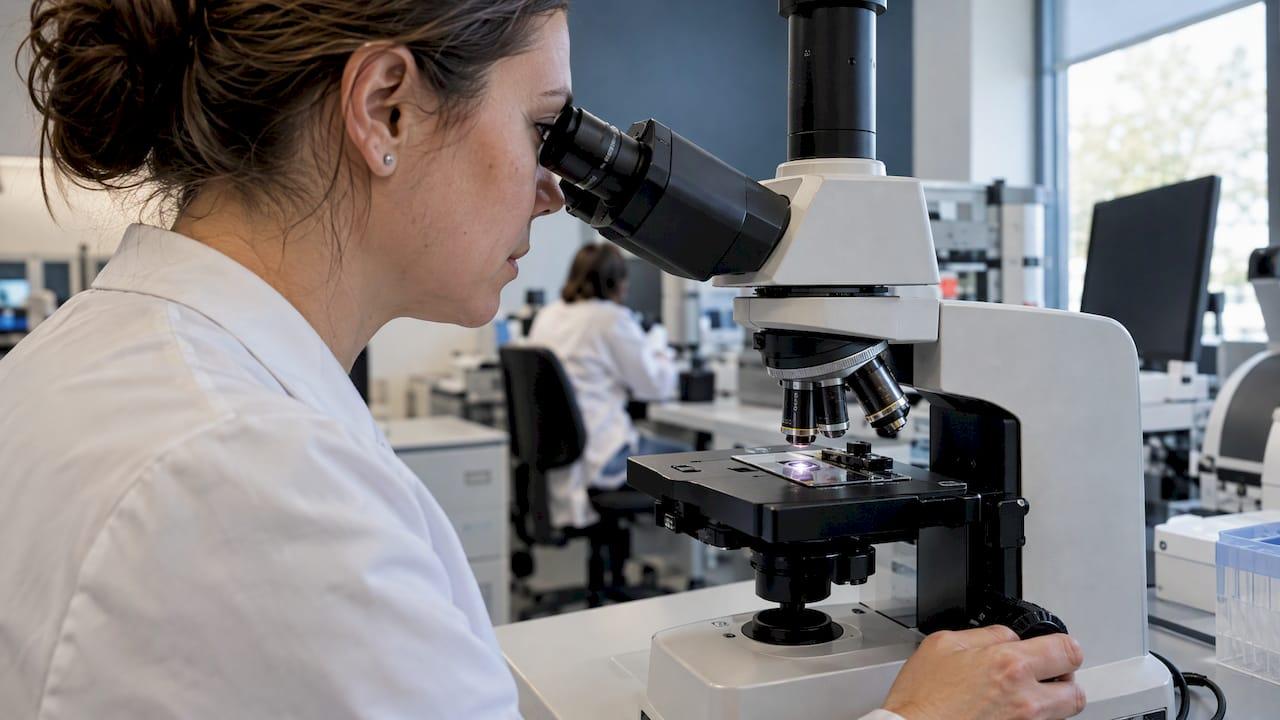
Urine cytology is very reliable when it says “cancer” and much less reliable when it says “nothing found.” It picks up most high-grade bladder tumors and carcinoma in situ, but it misses many low-grade tumors. A negative result therefore never closes the question on its own. This guide gives the numbers by tumor grade, explains why they vary from study to study, and shows how to read a negative, atypical or positive report.
TL;DR
- Sensitivity depends heavily on grade: the EAU guidelines cite 84% for high-grade (G3) tumors and 16% for low-grade (G1) tumors.
- Specificity is high, generally 90% or more in experienced hands, so a clearly positive result is rarely a false alarm.
- A negative cytology does not rule out urothelial carcinoma, and cystoscopy cannot be replaced by cytology.
- Guidelines do not recommend cytology as a routine first test for microscopic blood in the urine. It is used selectively and as an adjunct in surveillance.
- Accuracy depends on the sample, the number of samples and the laboratory reading it.
Table of Contents
- What urine cytology actually measures
- Sensitivity: how many cancers does it catch?
- Specificity: how often is a positive result right?
- Why the numbers differ from study to study
- What a negative, atypical or positive result means
- How cytology fits with cystoscopy and other tests
- Getting the most accurate result
- Our perspective
- Cytology and lab testing from EIV Diagnostics
- FAQ
- Sources
What urine cytology actually measures
Urine cytology is a pathologist’s microscope examination of cells shed into a urine sample. The pathologist looks for cells whose nuclei and shape suggest urothelial carcinoma, the cancer that arises in the lining of the bladder, ureters and kidney collecting system. It does not measure a chemical or a protein. It is a visual judgment about cell appearance, which is why the quality of the sample and the skill of the reader matter so much.
Cleveland Clinic notes that cytology can only help diagnose cancer and that providers do not use it alone to diagnose urinary system cancers. If atypical, suspicious or cancer cells show up, further testing such as cystoscopy or a CT scan is typically recommended.
If you want a plain explanation of the related microscope exam of urine for blood cells, crystals and bacteria, our guide to the urine microscopic exam covers it. That test is different from cytology, which looks specifically for abnormal urothelial cells.
Sensitivity: how many cancers does it catch?
Sensitivity is the share of people who truly have cancer that the test flags. For urine cytology, the answer is “it depends on the tumor.”
By tumor grade
The EAU guidelines on non-muscle-invasive bladder cancer state that voided urine or bladder-washing cytology has high sensitivity in high-grade/G3 tumors (84%) but low sensitivity in low-grade/G1 tumors (16%). Sensitivity for carcinoma in situ (CIS) ranges widely, from 28% to 100%.

Pathology Outlines reports a similar spread: 10% to 43.6% for low-grade and 50% to 85% for high-grade urothelial carcinoma. Cleveland Clinic summarizes it from the patient side: about 95% accuracy for invasive high-grade tumors and carcinoma in situ, and 10% to 50% for low-grade carcinoma.
The pattern is consistent across sources. High-grade tumors shed cells that look clearly abnormal, so cytology sees them. Low-grade tumors shed cells that look close to normal, so cytology often cannot tell the difference.
Overall sensitivity in real populations
Overall numbers are lower because most tumors found in many populations are low grade. Several large series have reported sensitivity between 42% and 66% depending on the population studied in the broader literature, and a 2025 scoping review found that across four large studies sensitivity ranged from 38% to 66%. In the DETECT I multicenter study, 52.3% of the bladder cancers diagnosed had a false-negative cytology.
A 2021 U.S. study of 409 consecutive patients with hematuria found sensitivity of 41% and specificity of 99%, with a positive predictive value of 75% and a negative predictive value of 96%. In patients being followed after bladder tumor surgery, a 2024 meta-analysis found pooled sensitivity of 0.52 and specificity of 0.93.
| Setting | Reported sensitivity | Reported specificity | Source |
|---|---|---|---|
| High-grade (G3) tumors | 84% | Above 90% in experienced hands | EAU guidelines |
| Low-grade (G1) tumors | 16% | Above 90% in experienced hands | EAU guidelines |
| 409 hematuria patients (U.S., 2021) | 41% | 99% | AJCU study |
| Follow-up after surgery (meta-analysis, 2024) | 52% | 93% | Yao et al. |
These figures are not contradictory. They describe different tumor mixes, different collection methods and different definitions of a positive result.
Specificity: how often is a positive result right?
Specificity is the share of people without cancer whom the test correctly clears. Urine cytology does well here. Clinical Tree reports that specificity of a positive urine cytology is high, 95% to 100% in most studies. The EAU notes that interpretation is user-dependent, but in experienced hands specificity exceeds 90%.
The 2025 scoping review gives a slightly wider range, 90% to 98% across four large studies. Other sources quote lower figures at the bottom of a broad range, because the number depends on whether the sample was voided or instrumented and on how “positive” is defined.
False positives are uncommon, but they happen. Clinical Tree lists bladder stones, human polyomavirus infection and chemotherapy as situations where they have occurred. The EAU adds that low cellular yield, urinary tract infections, stones and intravesical instillations can hamper evaluation. If you have any of these, tell the provider who ordered the test, since it changes how the report should be read.
If you are also dealing with a possible infection, our articles on urine culture timing and PCR for UTI explain how infection testing fits alongside this work.
Why the numbers differ from study to study
If you have seen sensitivity quoted anywhere from 19% to 89%, that is not an error. Clinical Tree explains that the figure depends on how the sample was collected, how many samples were obtained, how it was processed and what counts as a positive. The main drivers are below.
- Tumor grade. As above, high-grade tumors are far easier to detect than low-grade ones.
- Collection method. Instrumented samples such as bladder washings carry more cells than a simple voided sample.
- Number of samples. One sample can miss what several samples catch.
- Processing. Only a small volume of urine can be processed, and a 2024 systematic review notes that red blood cells and leukocytes confound the analysis.
- The reader. Results can be influenced by inter-operator variability. Clinical Tree adds a useful benchmark: for high-grade disease, most studies of instrumented urine show sensitivity above 70%, and a figure below 60% suggests a laboratory problem.
- The patient group. The same review points out that the ideal test differs by situation. In hematuria workups, where most people do not have cancer, you want high specificity and positive predictive value. In people on surveillance after a prior bladder cancer, you want high sensitivity and negative predictive value.
The practical message: a cytology result is only as good as the specimen and the pathologist who reads it. That is why subspecialty review matters.
What a negative, atypical or positive result means
Negative
A negative report means no abnormal cells were seen in that sample. The EAU is explicit that negative cytology does not exclude urothelial carcinoma. The 2025 scoping review also cautions that a good negative predictive value (84% to 95%) mainly reflects low disease prevalence in the people tested, not diagnostic reassurance. If you have symptoms or risk factors, a negative cytology should not stop the workup your urologist has planned.
Atypical
Atypical results are the ones that cause the most anxiety. The Paris System for Reporting Urinary Cytology defines five categories: nondiagnostic, negative for urothelial carcinoma, atypical urothelial cells, suspicious for high-grade urothelial carcinoma, and high-grade urothelial carcinoma. The atypical category carries a risk of high-grade malignancy of 24% to 53%. A 2025 review notes that before the Paris System, the atypia rate once exceeded 50%, which led many clinicians to view urine cytology as clinically unreliable.
A 2023 Finnish study of 205 atypical cases found an overall malignancy risk of 29.8% for all cases and 62.9% in histologically confirmed cases, with high-grade malignancy at 16.6% and 35.1% respectively. The EAU advises repeat investigation when cytology is suspicious. Atypical does not mean cancer, and it does not mean nothing. It means a urologist should decide on follow-up, which often includes cystoscopy.

Positive
A clear high-grade positive is a strong signal. The EAU notes that a positive voided cytology can indicate urothelial carcinoma anywhere in the urinary tract, which is why the next steps can include imaging as well as cystoscopy.
How cytology fits with cystoscopy and other tests
The guideline position is consistent. The EAU states that cystoscopy cannot be replaced by cytology or any other non-invasive test, and recommends voided cytology as an adjunct to detect high-grade tumors. A 2013 American Family Physician review reported 48% sensitivity for cytology versus 87% for cystoscopy.
In the workup of blood in the urine
The 2020 AUA microhematuria guideline, as summarized by UroToday, says no urinary markers, including cytology, should be used in the initial evaluation. Cytology may be obtained for people with persistent microhematuria after a negative workup who also have irritative voiding symptoms or risk factors for carcinoma in situ. The American Cancer Society likewise says cytology can find some bladder cancers but is not reliable enough to be a good screening test. The 2025 review found guideline consensus across the AUA, EAU, BAUS and NICE, and reported that CT urography combined with flexible cystoscopy performed far better than cytology alone.
In surveillance
For people already treated for non-muscle-invasive bladder cancer, cytology remains useful as an adjunct, especially for high-grade disease. The AUA/SUO guidance reported by UroToday notes that single protein and cell-based biomarkers have sensitivity of 60% to 70% in surveillance, with specificity (70% to 80%) lower than cytology, and that biomarkers should not replace cystoscopy. A 2024 systematic review of five urine-based biomarker tests found median sensitivity from 65.7% to 100% and specificity from 62.5% to 93.8%, yet none has shown evidence to supplant cystoscopy as the diagnostic standard.
Getting the most accurate result
You cannot change tumor biology, but you can improve the odds that a cytology is interpretable.
- Follow the collection instructions you are given. The ordering provider decides whether a voided sample or an instrumented one is appropriate.
- Tell your provider about infections, stones, recent chemotherapy or bladder instillations. These can cause misleading cell changes or hamper evaluation.
- Ask whether more than one sample is planned. Sampling over more than one occasion is one of the factors that affects sensitivity.
- Use a laboratory with pathologist-level review. Because interpretation is user-dependent, who reads the slide matters.
- Keep your follow-up appointment. Whatever the result, your urologist decides whether cystoscopy or imaging comes next.
Our perspective
We read urine cytology as one piece of a diagnostic picture, never as a stand-alone verdict. The numbers in this article show why: it is strong for high-grade disease and weaker for low-grade disease, so it earns its place next to cystoscopy and imaging rather than in place of them.
What we can control at the laboratory is the quality of the read. EIV Diagnostics is an independent pathology laboratory in Fresno, and our cytology services are built around board-certified pathologists with subspecialty expertise, CAP-accredited quality standards and a focus on rapid turnaround, so your provider receives a clear report without unnecessary delay.
We also work with the way people actually get care. We serve providers, patients with prescriptions and self-pay customers, and we offer mobile phlebotomy for home or office draws. A good result starts with a good specimen and a pathologist who knows what they are looking at.
EIV Diagnostics
Cytology and lab testing from EIV Diagnostics
EIV Diagnostics provides cytology alongside histopathology, clinical pathology, molecular pathology and digital pathology for providers and patients across Fresno, Clovis, Madera, Tulare and Kings counties and nearby communities. You can see what we offer on our cytology services page or read more in our guide to cytology testing in Tulare County.
If you have a prescription or an order from your provider, we can work from it. If you prefer to pay out of pocket for tests, see our self-pay testing page. For blood work that is easier to do at home or at the office, mobile phlebotomy starts from $65 per visit. Browse the full list on our services page.
FAQ
How accurate is urine cytology for bladder cancer?
It depends on the tumor. Reported sensitivity is about 84% for high-grade tumors and 16% for low-grade tumors, and specificity is generally above 90% in experienced hands, according to the EAU guidelines. Overall sensitivity in mixed populations is lower, often 40% to 65%.
What is the sensitivity of urine cytology?
Overall sensitivity ranges from roughly 19% to 89% across studies, depending on collection method, number of samples, processing and the definition of a positive. High-grade disease is detected far more often than low-grade disease.
Does a negative urine cytology mean I do not have bladder cancer?
No. Negative cytology does not exclude urothelial carcinoma, especially low-grade tumors. If you have blood in your urine or other symptoms, your urologist may still recommend cystoscopy or imaging.
What should I do if my result says atypical?
Talk with your urologist. In the Paris System the atypical category carries a high-grade malignancy risk of 24% to 53%, and repeat investigation is advised. Follow-up often includes cystoscopy, and your provider decides what fits your situation.
Sources
- Urine Cytology: What Is It, Purpose, Procedure & Results (Cleveland Clinic)
- Diagnosis, EAU Guidelines on Non-muscle-invasive Bladder Cancer
- Pathology Outlines: Cytology, neoplastic
- Urine and Bladder Washings (Clinical Tree)
- Evaluating the Role of Urine Cytology in Haematuria (PMC12702565)
- Original Article, AJCU 2021 hematuria cohort
- Diagnostic accuracy of cytology and urine methylation test (PMC11405155)
- Noninvasive Tests for Bladder Cancer Detection (PMC11181788)
- The Paris system for reporting urinary cytology (PMC12700038)
- Atypical urothelial cells classified according to the Paris System (Cancer Cytopathology)
- Assessment of Asymptomatic Microscopic Hematuria in Adults (American Family Physician)
- AUA Guidelines 2020: Microhematuria (UroToday)
- AUA 2024: Role of Urinary Markers in Surveillance of NMIBC (UroToday)
- Early Signs of Bladder Cancer (American Cancer Society)