
By EIV Diagnostics · August 17, 2026
Molecular Testing for Cancer: What Results Mean for Treatment
Discover how molecular testing for cancer can personalize treatment options. Learn its role in targeting therapies and improving outcomes.

Molecular testing for cancer examines a tumor’s genes, proteins, or other molecular markers to find changes that can be targeted with specific drugs or that predict how well immunotherapy will work. Doctors order these tests most often to guide treatment decisions in advanced or metastatic cancer, matching a patient to a targeted therapy, an immunotherapy, or a clinical trial instead of a generic chemotherapy regimen. Trusted groups like the National Cancer Institute and the American Society of Clinical Oncology set the guidelines behind this testing, and labs such as EIV Diagnostics carry out the molecular pathology work that turns a tissue or blood sample into a report your oncologist can actually act on.
If you or someone you’re caring for just heard the phrase “molecular testing” for the first time, you’re not alone in feeling behind. This piece walks through what the tests actually detect, how samples get processed, when doctors order them, what the report language means, and what to do next once results land in your inbox.
Key Takeaways
Molecular testing for cancer works by identifying specific tumor mutations and biomarkers that determine which targeted therapies, immunotherapies, or clinical trials are likely to help a given patient.
| Point | Details |
|---|---|
| Testing guides treatment choice | Results identify actionable mutations that match patients to targeted drugs or immunotherapy instead of generic chemotherapy. |
| Ask about multigene panels | ASCO recommends broad NGS panels for advanced cancer when multiple biomarker-linked therapies exist for the disease type. |
| Sample quality matters | Confirm whether archived tissue is sufficient or whether a fresh biopsy or liquid biopsy is needed for accurate results. |
| Expect a one to three week wait | Turnaround depends on test complexity, so ask for a specific timeline and cost estimate up front. |
| EIV Diagnostics supports testing | The lab offers molecular pathology testing with or without a physician’s order, plus mobile phlebotomy for at-home sample collection. |
Table of Contents
- What Molecular Testing Reveals About a Tumor
- How Do NGS, PCR, FISH, and Liquid Biopsy Differ?
- Which Sample Types Are Used and How Are They Processed?
- When Do Doctors Recommend Molecular Testing?
- How Molecular Test Results Change Your Treatment Plan
- Why Molecular Testing Isn’t Always a Clear Answer
- How Long Does It Take and What Does It Cost?
- How to Get Tested and What to Ask Your Care Team
- Reading Your Molecular Test Report: Key Terms Explained
- How EIV Diagnostics Supports Molecular Testing
- Getting Molecular Testing Through EIV Diagnostics
- Sources
- FAQ
What Molecular Testing Reveals About a Tumor
Short answer: molecular tests identify specific gene mutations, protein levels, or other biological changes in a tumor that predict whether a particular drug will work. That single fact changes almost everything downstream, because two patients with the same cancer type and stage can walk away with completely different treatment plans once their tumor’s molecular profile is known.
The tests serve several distinct clinical purposes, and it helps to know which one applies to your situation:
- Selecting targeted therapy — matching a specific drug to a specific mutation, like an EGFR inhibitor for an EGFR-mutant lung tumor.
- Predicting immunotherapy response — markers like PD-L1 expression or microsatellite instability help forecast whether immune-based drugs will help.
- Establishing prognosis — some molecular signatures correlate with slower or faster disease progression.
- Monitoring treatment response — serial testing, often through blood, tracks whether a tumor is shrinking or developing resistance.
- Identifying clinical trial eligibility — many trials only enroll patients whose tumors carry a specific biomarker.
Certain biomarkers show up again and again in oncology reports because they’re tied to approved therapies. In lung cancer, that list includes EGFR, ALK, KRAS, and BRAF. In breast cancer, HER2 amplification determines eligibility for HER2-targeted drugs. In colorectal cancer, KRAS, NRAS, and BRAF status decide whether certain antibody therapies will work at all. And across many tumor types, PD-L1 expression, microsatellite instability, and tumor mutational burden help predict immunotherapy benefit.
This kind of testing matters most for people with advanced or metastatic disease, cancers that have recurred after initial treatment, or tumor types where several targeted drugs already exist. Biomarker testing lets clinicians profile a tumor’s molecular signature and choose treatments that hit the tumor’s actual drivers rather than defaulting to broad-spectrum chemotherapy, which often means fewer side effects for a comparable or better result, according to Cleveland Clinic.

How Do NGS, PCR, FISH, and Liquid Biopsy Differ?
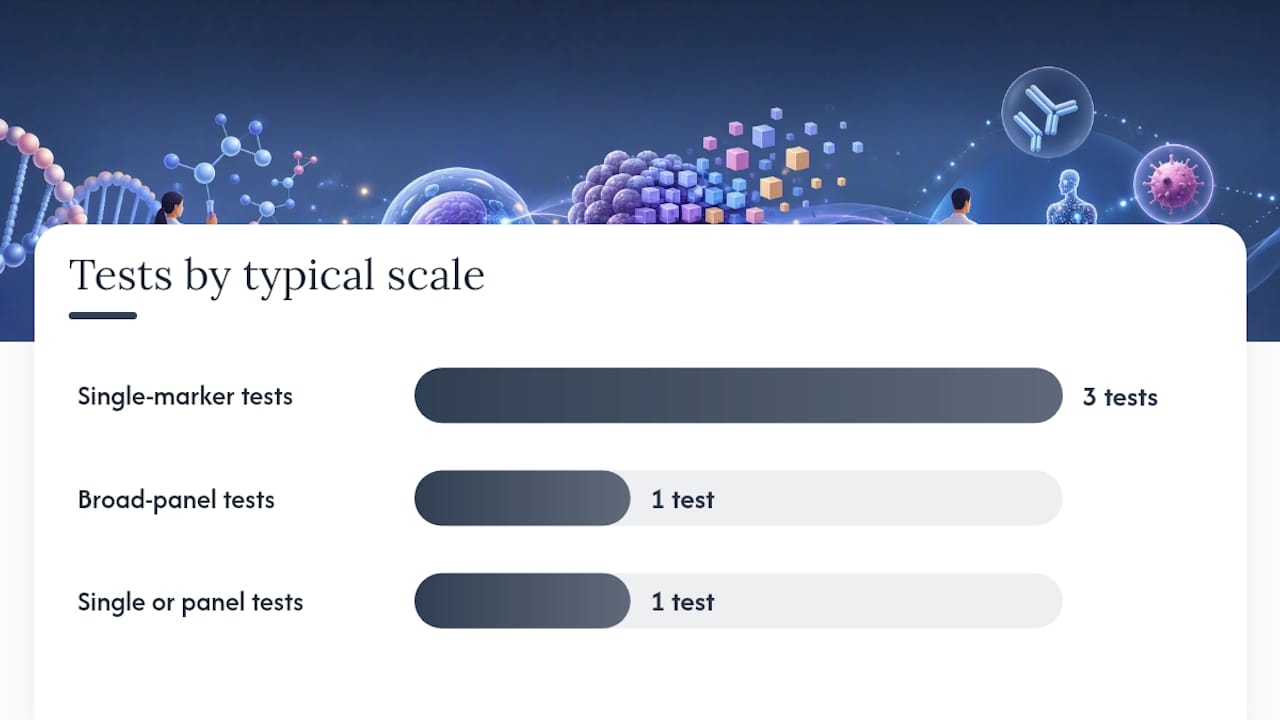
Every molecular test falls into one of two camps: it checks a single, specific marker, or it scans a broad panel of genes at once. The choice between them depends on how many actionable mutations exist for your cancer type and how much tissue is available.
PCR (polymerase chain reaction) amplifies a specific, known DNA sequence to detect one mutation at a time. It’s fast and cheap but only answers a narrow question. FISH (fluorescence in situ hybridization) uses fluorescent probes to detect specific chromosomal rearrangements or gene amplifications, commonly used to confirm HER2 status or ALK rearrangements. IHC (immunohistochemistry) stains tissue to measure protein expression levels, the standard method for checking PD-L1 or HER2 protein on the cell surface. Next-generation sequencing (NGS) reads hundreds of genes simultaneously, building what amounts to a molecular blueprint of the tumor in a single test. Liquid biopsy analyzes circulating tumor DNA shed into the bloodstream, avoiding a new tissue biopsy altogether.
| Test type | What it detects | Typical scale | Best-use scenario |
|---|---|---|---|
| PCR | One known mutation | Single marker | Confirming a specific, already-suspected mutation quickly |
| FISH | Chromosomal rearrangements, gene amplification | Single marker | Confirming HER2 or ALK status |
| IHC | Protein expression on cells | Single marker | PD-L1 or HER2 protein screening |
| NGS panel | Dozens to hundreds of genes | Broad panel | Advanced cancers with multiple possible targeted therapies |
| Liquid biopsy (ctDNA) | Tumor DNA fragments in blood | Single marker or panel | Tissue unavailable, or monitoring for resistance over time |
Peer-reviewed reviews of molecular diagnostics describe these methods collectively as offering strong precision and sensitivity for catching the genetic and protein changes that drive cancer behavior, according to a short review published in PMC. In practice, a lung cancer patient might get an NGS panel up front to check for EGFR, ALK, ROS1, and several other actionable mutations at once, since checking each one individually with separate single-marker tests would burn through limited tissue and take far longer. A melanoma patient headed toward immunotherapy might just need a targeted PD-L1 IHC stain instead of a full panel. If you want a deeper technical walkthrough of how these platforms compare, EIV Diagnostics has a patient-facing overview of molecular diagnostic testing worth reading alongside this one.
Which Sample Types Are Used and How Are They Processed?
Most molecular testing starts with either a tissue biopsy or a blood draw for liquid biopsy, and occasionally bone marrow for blood cancers. Once a sample leaves the collection room, it goes through a certified lab workflow designed to protect the genetic material and produce a reliable, reportable result.
Here’s the general path a tissue sample takes:
- Collection and labeling — the biopsy or surgical specimen is identified and tracked immediately.
- Fixation — tissue is preserved, typically in formalin, to stabilize it for storage and sectioning.
- DNA/RNA extraction — the lab pulls genetic material out of the fixed tissue.
- Library preparation — extracted DNA or RNA is prepared for sequencing or assay-specific processing.
- Sequencing or assay run — the actual molecular test, whether NGS, PCR, FISH, or IHC, is performed.
- Quality checks — technical staff verify the run met accuracy thresholds.
- Pathologist review — a board-certified pathologist interprets the raw data against clinical context.
- Clinical report generation — findings are compiled into a report your oncologist can use.
Tissue-based testing generally remains the gold standard for comprehensiveness because it captures the tumor’s full genetic landscape, while liquid biopsy is a valuable option when tissue is unavailable or when a doctor wants to monitor a tumor’s molecular status over time without another invasive procedure, according to Memorial Sloan Kettering Cancer Center. Sometimes a lab can use archived tissue from a prior surgery or biopsy instead of requiring a fresh sample, which saves the patient an additional procedure, though a new biopsy may be needed if the old tissue is too old or too small.
Pro Tip: Ask your care team whether your archived tissue sample has enough tumor content for a full panel, and mention any treatments you’ve had since that sample was collected. Prior therapy can change a tumor’s molecular profile, so timing matters as much as the sample itself.
When Do Doctors Recommend Molecular Testing?
Testing is most routinely recommended for advanced, metastatic, or recurrent cancers, and for tumor types with well-established, actionable biomarkers already tied to approved drugs. ASCO recommends multigene panel testing specifically for patients with advanced disease or for cancers where multiple biomarker-linked therapies exist, since a broad panel can surface more than one treatment option in a single test rather than requiring sequential single-marker testing.
Situations worth raising directly with your oncologist include:
- A new diagnosis of metastatic or advanced-stage cancer.
- Cancer that has recurred after initial treatment.
- An unusual tumor histology that doesn’t fit a standard pattern.
- Interest in enrolling in a clinical trial that requires biomarker matching.
- Disease progression or resistance after responding to an earlier targeted therapy.
Not every cancer or every stage benefits from molecular testing right now. Some tumor types simply don’t have actionable biomarkers yet, and testing utility depends heavily on tumor type, stage, and whether a matching therapy actually exists. That’s exactly why this conversation belongs with your oncology team, not a checklist.
How Molecular Test Results Change Your Treatment Plan
Results can open the door to a targeted drug, suggest immunotherapy is worth trying, reveal a resistance mechanism, or point toward a clinical trial that wouldn’t have been an option otherwise. This is the entire point of the test: turning a molecular finding into a concrete next step.
A few of the clearest examples of how a specific result maps to a specific treatment path:
- EGFR mutation in lung cancer → EGFR-targeted inhibitor drugs.
- ALK rearrangement → ALK inhibitor therapy, often with durable responses.
- MSI-high or high tumor mutational burden → strong candidate for immunotherapy across several cancer types.
- HER2 amplification in breast or gastric cancer → HER2-targeted antibody therapy.
- BRCA1/BRCA2 mutations → eligibility for PARP inhibitor drugs.
Complex cases often go through a molecular tumor board, a multidisciplinary review where pathologists, oncologists, and sometimes genetic counselors discuss a report together and decide how it should shape treatment, including whether an off-label use of an approved drug or a clinical trial makes more sense than standard care. Some labs and cancer centers integrate this kind of review directly into their workflow so that a complicated report doesn’t just sit in a chart unread, according to Columbia’s Herbert Irving Comprehensive Cancer Center.
A molecular report is not a treatment plan by itself. It’s raw material. The value comes from a clinician, or ideally a tumor board, translating that data into a decision specific to your case, your prior treatments, and what’s actually available to you.
Why Molecular Testing Isn’t Always a Clear Answer
Molecular testing is powerful, but it isn’t perfect. Results can come back negative, inconclusive, or with a variant of uncertain significance (VUS), meaning the lab found a genetic change but doesn’t yet know whether it affects cancer behavior or drug response.
Two technical concepts explain most of the confusion patients run into. Sensitivity refers to how well a test catches a true mutation when one is present; specificity refers to how well it avoids false positives. Tissue biopsies generally detect more alterations than liquid biopsies because circulating tumor DNA can be diluted or simply may not shed enough material into the bloodstream to register, which is why MSKCC notes that liquid biopsy is valuable but not a full substitute for tissue testing in every case.
Tumors also evolve. A biomarker present at diagnosis can disappear, and new resistance mutations can emerge after a patient has been on targeted therapy for months or years, which is exactly why doctors sometimes order repeat testing rather than relying on results from a biopsy taken years earlier.
If your report comes back negative or shows only a VUS, a few paths are worth discussing with your care team:
- Ask about a second opinion or a re-read of the original data by another pathologist.
- Consider a repeat biopsy if enough time has passed or if the disease has progressed.
- Ask about serial ctDNA monitoring to catch new mutations as they emerge.
- Search for clinical trials that don’t require a specific biomarker match.
Pro Tip: A VUS is not the same as “no mutation found.” It means the lab found something real but can’t yet tell you what it means. Ask your oncologist whether that variant should be reassessed in six or twelve months, since databases connecting variants to clinical significance are updated constantly.
How Long Does It Take and What Does It Cost?
End-to-end molecular testing usually takes one to three weeks from sample collection to a finished clinical report, though the exact timeline depends heavily on test complexity. A single-marker PCR or IHC test can come back faster; a broad NGS panel checking hundreds of genes takes longer because of the extra sequencing and bioinformatics work involved.
The full timeline typically breaks down like this: sample collection and shipping (same day to a few days), lab processing including extraction and sequencing (several days to a week), pathologist review and quality control (a few more days), and final report generation and delivery to your oncologist. Reports commonly take several weeks end-to-end because of sample preparation, quality assurance, and clinical reporting steps, even though the raw sequencing itself can run faster, according to American Cancer Society data on biomarker test workflows.
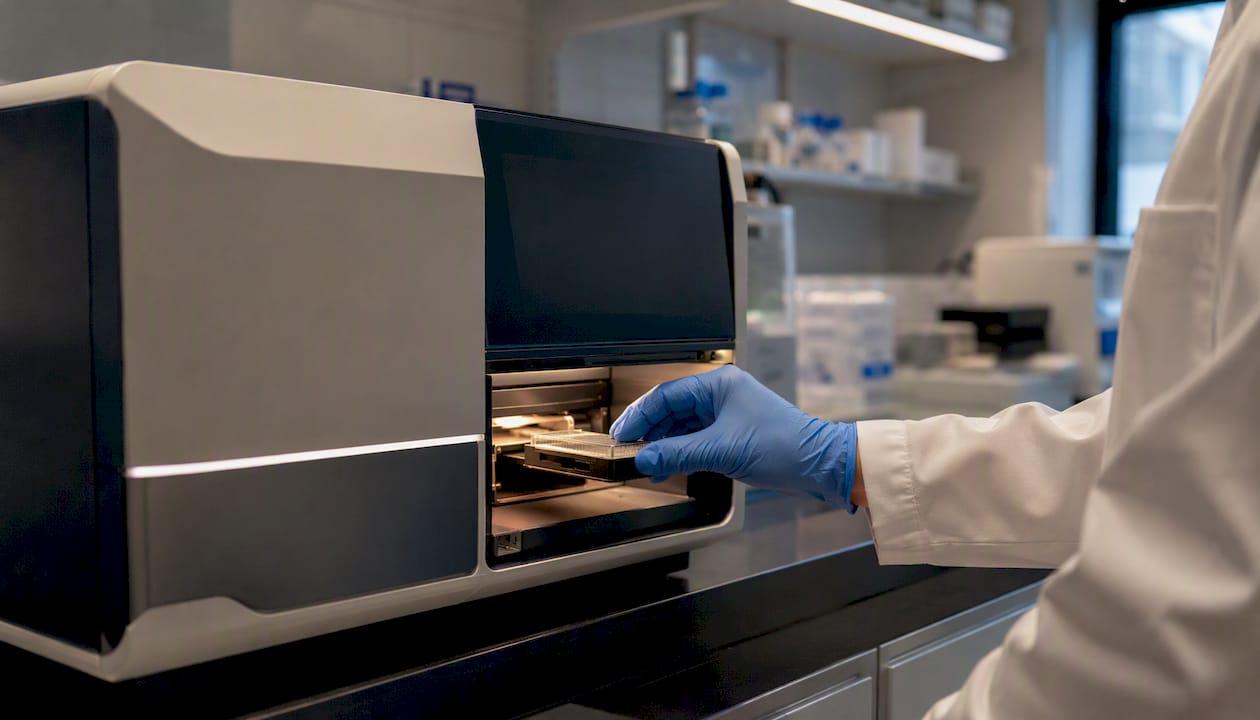
Cost varies widely depending on scope. A single-gene test costs far less than a comprehensive NGS panel checking hundreds of genes, and highly specialized send-out tests tend to run the most expensive. Insurance coverage also varies: many plans cover molecular testing when it’s considered medically necessary for treatment decision-making, but prior authorization is common, and some plans require documentation showing that a specific test result would actually change the treatment plan.
Pro Tip: Ask your care team or the testing lab for a written cost estimate before the sample is collected, and ask specifically whether they’ll help with prior authorization or an appeal if your insurer initially denies coverage. Labs that handle a high volume of oncology testing usually have staff who do this regularly.
How to Get Tested and What to Ask Your Care Team
Most molecular tests are ordered directly by your oncologist, though some labs also accept direct-to-patient requests. The general process runs through four stages: your doctor (or you) orders the test, a sample gets collected, the lab processes it, and you receive a report your care team can review with you.
Steps worth taking if you think molecular testing applies to your situation:
- Ask your oncologist directly whether a multigene NGS panel makes sense for your cancer type and stage.
- Confirm whether archived tissue from a prior biopsy or surgery is usable, or whether a new sample is needed.
- Ask about liquid biopsy as an alternative if a tissue biopsy isn’t feasible right now.
- Request a copy of the full report for your own records, not just a summary.
- Ask directly about expected turnaround time and estimated out-of-pocket cost.
Questions worth bringing to that conversation:
- Will this test result actually change my treatment plan?
- Is my archived tissue sample sufficient, or do I need a new biopsy?
- What’s the realistic turnaround time for my specific test?
- Will my insurance cover this, and who handles prior authorization?
- Who interprets the final results, and can I get a walkthrough of the report?
This is also where a lab like EIV Diagnostics fits into the picture. As an independent pathology laboratory, EIV Diagnostics works with providers who order testing on a patient’s behalf and also accepts direct patient requests when a prescription supports it, and its mobile phlebotomy service means a blood draw for a liquid biopsy or companion test can happen at home or in an office instead of requiring a separate trip to a draw site. If you’re navigating this process without a clear point of contact, asking a lab directly about their patient intake options is a reasonable next step.
Reading Your Molecular Test Report: Key Terms Explained
A molecular test report lists specific findings and connects each one to a treatment implication or a level of supporting evidence. Learning the vocabulary makes the difference between staring at a confusing document and having a real conversation with your oncologist about what it means for you.
- Actionable mutation — a genetic change with a known, approved (or trial-available) therapy that targets it directly.
- Variant of uncertain significance (VUS) — a genetic change detected in the tumor, but without enough evidence yet to know whether it affects cancer behavior or treatment response.
- Microsatellite instability (MSI) — a marker of DNA repair dysfunction; MSI-high tumors often respond well to immunotherapy.
- Tumor mutational burden (TMB) — the total number of mutations found in a tumor; higher TMB often correlates with better immunotherapy response.
- PD-L1 expression — a protein level measurement that helps predict immunotherapy benefit, usually reported as a percentage of cells staining positive.
- Allele frequency — the percentage of tumor cells carrying a specific mutation, which can hint at how dominant that mutation is within the tumor.
- Clinical significance tiers — a ranking system labs use to indicate how strong the evidence is behind a specific finding, from FDA-approved therapy to investigational-only.
An “actionable” result generally falls into one of three categories: it’s tied to an FDA-approved therapy for your exact cancer type, it’s tied to an approved therapy but used off-label for your cancer type, or it points toward an open clinical trial. If your report contains findings that seem genuinely unclear, ask specifically whether your case would benefit from a molecular tumor board review, where multiple specialists discuss the data together rather than one clinician interpreting it alone.
Pro Tip: It’s completely normal to find these reports overwhelming on first read. Ask your oncologist for a plain-language walkthrough and a written summary you can keep, and don’t hesitate to ask the same question twice if the first explanation didn’t fully land.
How EIV Diagnostics Supports Molecular Testing
EIV Diagnostics is an independent pathology laboratory offering molecular pathology, dermatopathology, clinical pathology, and digital pathology services, with rapid, board-certified reporting built to support real treatment decisions rather than sit in a queue. The lab is built around getting accurate, interpretable results back to patients and their care teams as quickly as the testing complexity allows.
What that looks like in practice:
- Molecular pathology testing covering the biomarker and genomic profiling work oncologists rely on for treatment planning.
- Mobile phlebotomy, bringing blood draws for liquid biopsy or companion testing directly to a patient’s home or office.
- Board-certified pathologists reviewing and signing out every report before it reaches a clinician.
- Direct-to-patient testing options, available with or without a physician’s order depending on the test.
- Reporting built for clinical integration, so oncology teams get results in a format they can act on quickly.
Labs also carry real accountability for quality and turnaround, and accredited quality control practices matter enormously here. Independent verification standards, like those described by laboratory partners such as Vertex Labs, reflect the same principle that governs clinical molecular testing: results are only as trustworthy as the quality control behind them.
If you’re a patient with a prescription, a provider looking to order testing for a patient, or someone who wants to explore direct-to-consumer options, reaching out to a lab that handles both clinical and molecular pathology under one roof simplifies a process that otherwise involves juggling multiple vendors.
A note from the lab
Translating a tumor’s molecular data into a report that actually changes a treatment decision is the core of what we do at EIV Diagnostics. A raw sequencing file means nothing to a patient or even most clinicians without a board-certified pathologist connecting each finding to its clinical significance and putting it into language an oncology team can use immediately. We work directly with oncologists to make sure a report doesn’t just list mutations, it tells a story about what those mutations mean for this specific patient’s options. If you have questions about whether testing applies to your situation, or you’re a provider looking to streamline how your patients get tested, reach out and start that conversation.
Getting Molecular Testing Through EIV Diagnostics
If you’ve read this far because you or a family member might need molecular testing, the practical next step doesn’t have to be complicated. EIV Diagnostics offers molecular pathology services for patients with a physician’s order and, in many cases, for patients who want to pursue testing directly, without waiting on a referral to work its way through a larger hospital system.
A few practical details worth knowing before you reach out:
- Testing can be ordered by your provider or, in applicable cases, requested directly by you as a patient.
- Mobile phlebotomy means the blood draw for a liquid biopsy or companion diagnostic can happen at your home or workplace instead of a separate lab visit.
- Reports are reviewed by board-certified pathologists before they reach your care team, so you’re not waiting on a second layer of review elsewhere.
- Providers looking to add molecular testing to their diagnostic workflow can request information on integration and turnaround.
If a new biopsy, a liquid biopsy draw, or a full molecular panel is on your radar right now, the fastest way forward is to reach out directly and ask what’s needed to get started.
Sources
- Biomarker Testing for Cancer Treatment - National Cancer Institute (NCI)
- Next-Generation Tumor Genetic Testing - Memorial Sloan Kettering Cancer Center (MSKCC)
- Biomarker testing in cancer (Cleveland Clinic)
This article is general information, not a substitute for advice from a qualified doctor. Consult a qualified healthcare professional about your own circumstances before acting on anything here.
FAQ
Does Insurance Cover Molecular Testing?
Many insurance plans cover molecular testing when it’s considered medically necessary for treatment planning, but prior authorization is common and coverage details vary by plan and by test type. Ask your care team or testing lab for a cost estimate and help navigating preauthorization before your sample is collected.
How Long Does Molecular Testing for Cancer Take?
Most molecular tests take one to three weeks from sample collection to a final clinical report, with broader NGS panels typically taking longer than single-marker tests like PCR or IHC. Complexity of the biomarker panel and lab workflow are the main drivers of turnaround time.
Is It Worth Getting Genetic Testing for Cancer?
For patients with advanced, metastatic, or recurrent cancer, or tumor types with established actionable biomarkers, molecular testing often opens treatment options that wouldn’t otherwise be considered. Its value depends on your specific cancer type and stage, so this is a decision to make directly with your oncologist rather than a blanket recommendation.
Why Would a Biopsy Be Sent for Molecular Testing?
A biopsy gets sent for molecular testing when a doctor wants to identify specific gene mutations or protein markers that could match a patient to a targeted therapy, predict immunotherapy response, or clarify prognosis. Tissue biopsies are often preferred over blood tests because they generally provide the most comprehensive picture of the tumor’s molecular makeup.
Recommended
- Molecular Diagnostic Testing: What Patients and Clinicians Need to Know | EIV Diagnostics | EIV Diagnostics
- Molecular Pathology Services | EIV Diagnostics | EIV Diagnostics | EIV Diagnostics
- PCR vs Rapid Test: Which COVID Test Is Right for You? | EIV Diagnostics | EIV Diagnostics
- CMP Test Code 10231: What It Measures and Why It Matters | EIV Diagnostics | EIV Diagnostics